Posted by Derek Leavitt on Fri, Mar 26, 2010 @ 10:59 AM
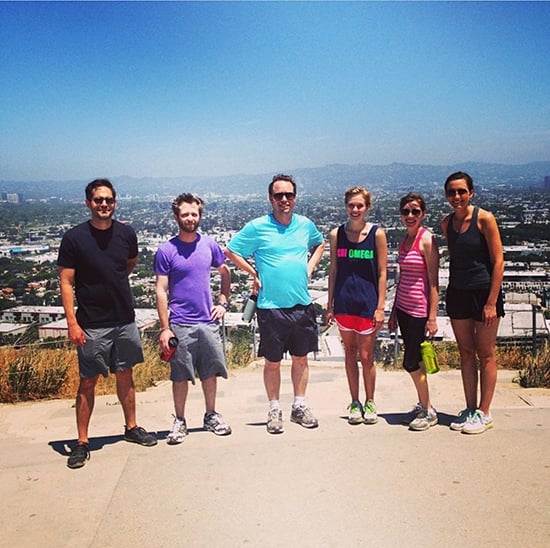
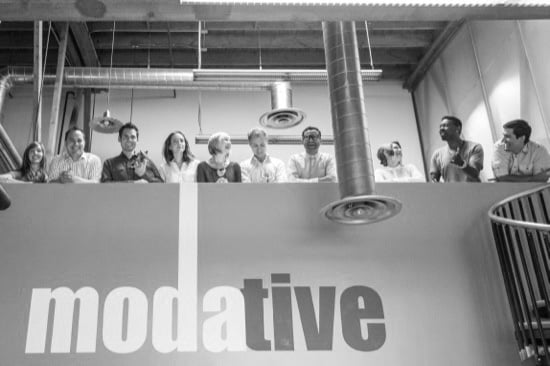
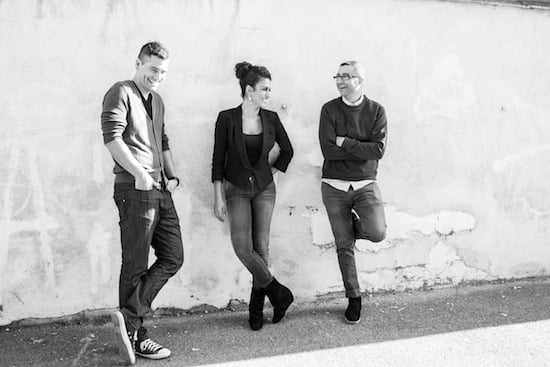
1. You Like Christian, Michael and Derek (the founders of Modative)
You want them to succeed.
You'd invest in their company if people were actually foolish enough to invest in architecture firms. Becoming a fan on facebook will be your investment.
Becoming a fan of Modative Architecture now is like buying Apple stock back in 1996, days before Steve Jobs returned. If you did that back then, you'd now be a kagillionaire. So, joining the Modative train now will get you some serious internet clout when we get around to designing the architecture equivalent of the ipod.
Hey, they seem like nice, upstanding citizens. I think I'll become a fan of their architecture firm.
2. You Hate Christian, Michael and Derek
You can't wait to see them fail.
You dislike them personally, their silly modern architecture and everything else they stand for. All great reasons to become a fan. It'll be like having front row facebook tickets to their demise.
I don't know. That's a pretty grainy political-ad-style photo. I can't wait to become a fan and watch their architecture empire crumble.
3. You Need Culture in Your Life
Actually, you don't need culture. You need the appearance of culture.
When your ex from high school finds you on facebook, they will dissect your profile, finding clues to the level of your lameness. Like it or not, you'll be defined by the pages on your profile. It could get ugly. But alas, there between the "Britney Spears Fan Page" and "Ground Beef Taco Lovers Club" they find a gem - "Modative Architecture". Bingo.
Wow, my ex follows a modern architecture firm. That's some serious culture and sophistication.
Little do they know, you consistently turn down invites to art gallery openings to stay home and watch bad reality TV shows in your underwear.
It's the appearance of culture we're after here people
4. It's a Low Maintenance Relationship
You know your random facebook acquaintance with the horrible band. The one that asked you to become a fan of their group. You gave in. Big mistake.
Now you're bombarded with daily group updates clogging your news feed:
"Check out our new song on MySpace called 'Pig's Lair'"
"Vote for us like a bagillion times in this useless online contest"
"Come rock out with us at our Tuesday night gig at Malloy's in Salinas, CA"
Salinas, seriously?
At Modative we won't spam up your news feed. Why? because we're too busy drawing buildings and other important architecture stuff. Complex, technical stuff.
We rarely update. And when we do, we'll be just as easy to ignore as the rest of your group/page updates.
So, if you're ready to make this minor commitment, you may facebook (used as a verb) us here - Modative Architecture on facebook
Craving more social media madness?
Follow Derek's frequent twitter updates here - @architectderek
Wait for Christian's rare tweets here - @modative_navar
Or, if you want the appearance of culture in your inbox, subscribe to this architecture blog to recieve an email every time we post.
Posted by Derek Leavitt on Thu, Mar 11, 2010 @ 05:42 PM
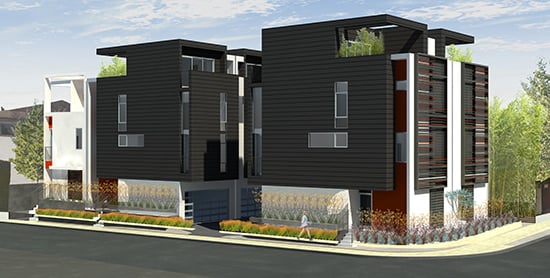
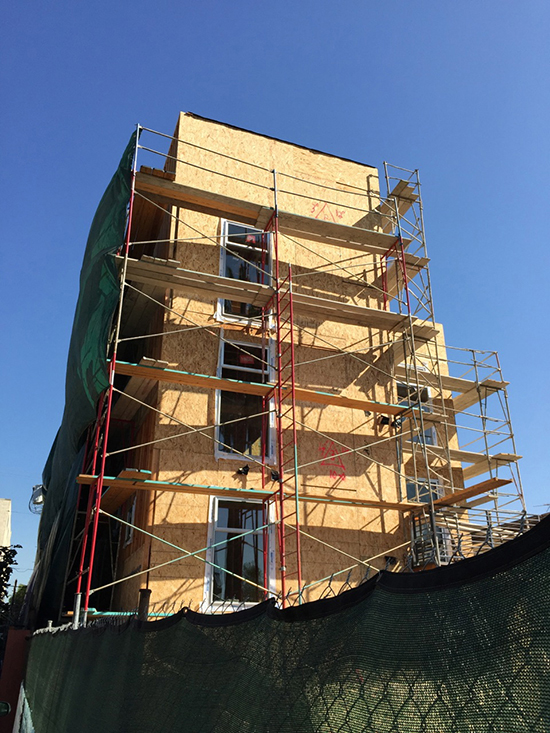
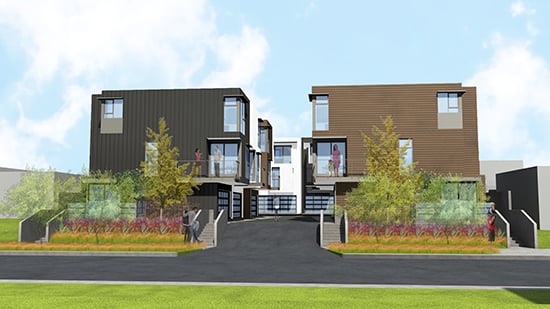
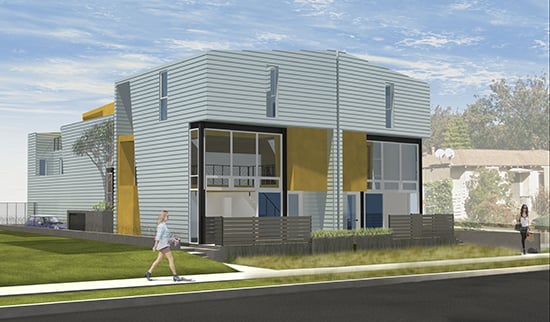
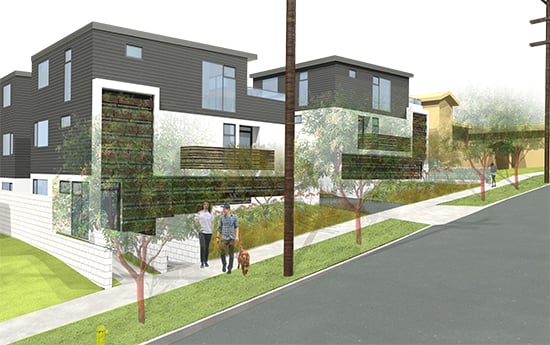
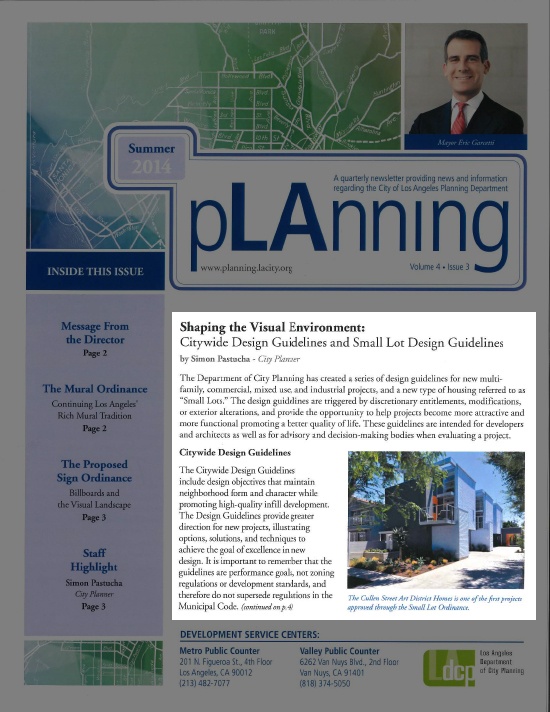
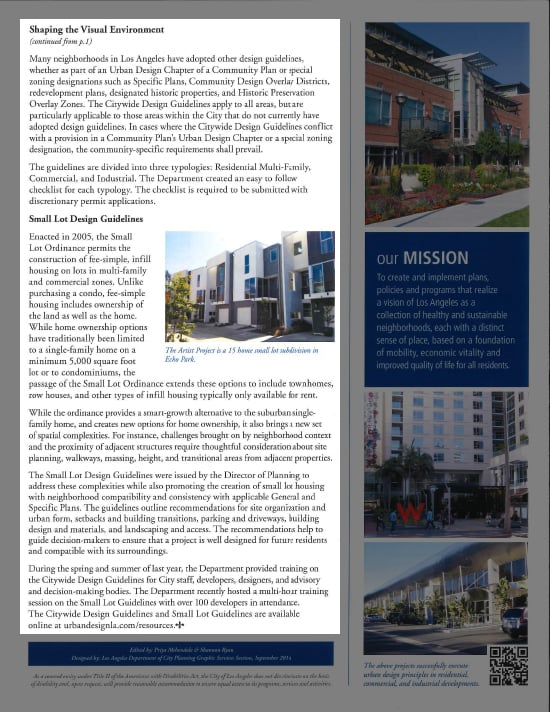
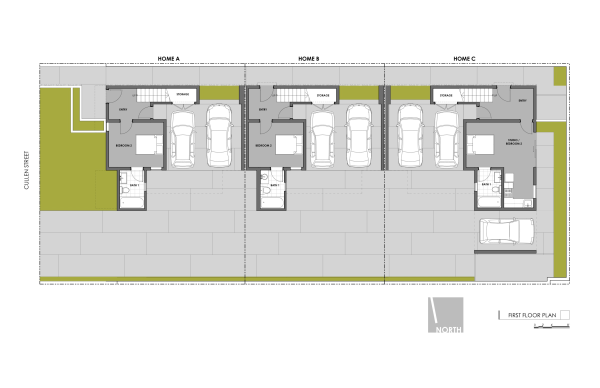
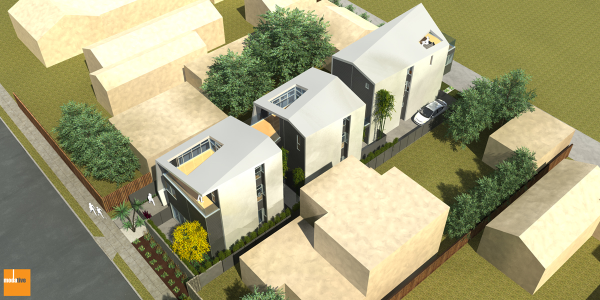
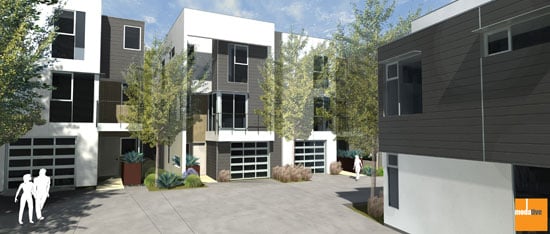
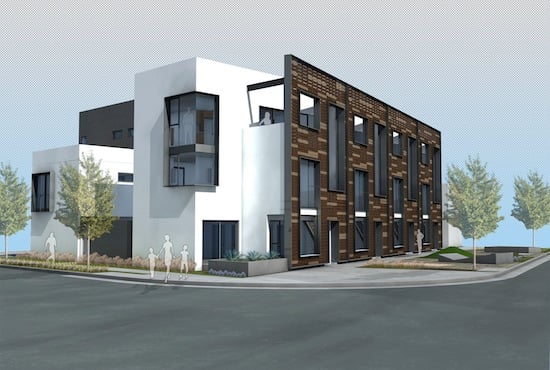
One of my favorite occurrences in the office is when my business partners and I have an impromptu design session, as recently occurred on the Cullen Street Small Lot Subdivision Project. Even though the project is far along in the architecture process (it was just submitted for permit plan check), we came to realize that the third floor plan master suite in one of the units was not up to par.

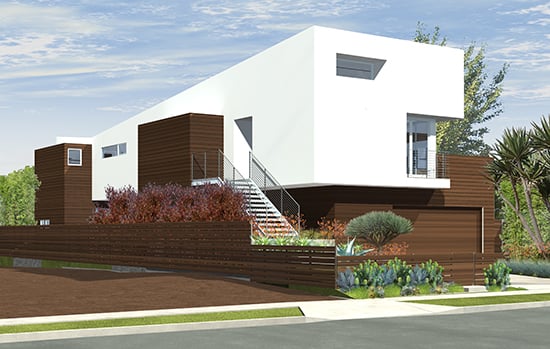
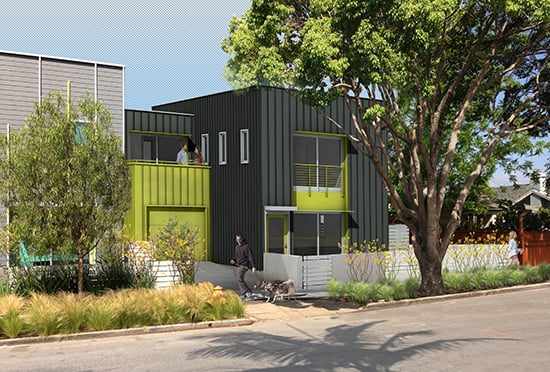
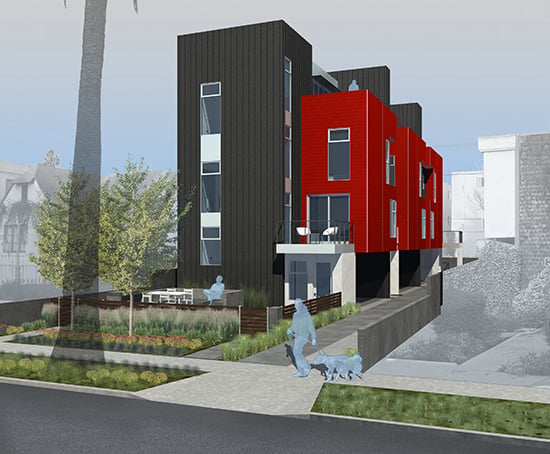
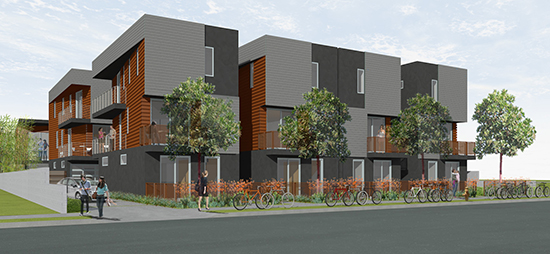
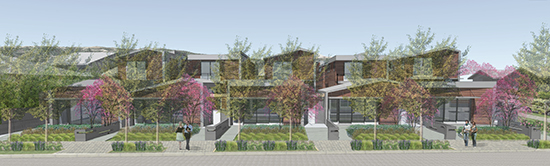
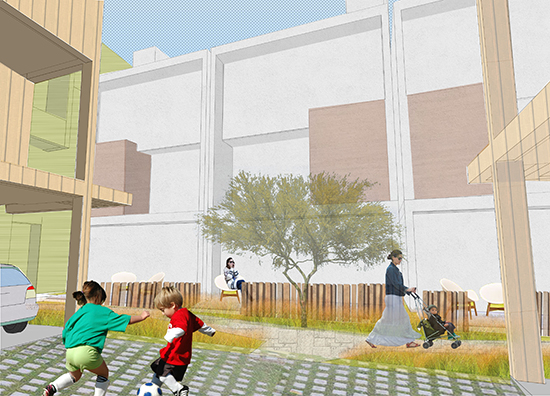
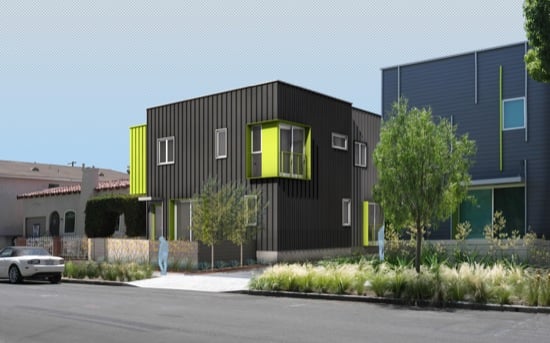
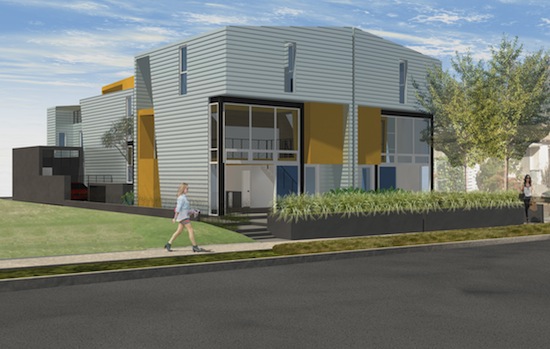
The plan in question is the top floor of Unit #3, the unit with the corner window in the foreground of the bottom right rendering.
These design sessions are very informal and typically consist of two of us hovering over the third person's computer screen blurting out comments.
"Move that wall over 6 inches left."
"OK, now let's try to fit the shower in that corner."
"Are you crazy? You can't put the shower there. We can't plumb that and it's a privacy nightmare!"
"What if we flip it to the other side of the room? Let me see it in 3D."
"That's better. Let's make that an option."
Arguments develop over seemingly small things like how many dressers people like to have in their bedroom. These often heated conversations are all in the name of great design. I think the tension is a good thing.
Average design is quiet. It rarely moves people to take a real stance.
Even something as simple as a master bedroom floor plan revision goes through this filter. Three (or more) design opinions pushing to make it better. These modern homes are small. Well designed floor plans are critical.
Here's a look at the multiple floor plan options that came out of this particular meeting of the minds.
Floor Plan Option 1 - The Original
This is what we started with: a floor plan with some problems. The wide "X" at the bottom of the room is an open-to-below space, meaning it's open to the living room below. Very loft like. We love open-to-below spaces in our homes; however, in this case. it was creating problems. The (low) bed wall was too short and the access to the office nook was awkward. There were other issues as well, but I'll spare you those details.
Floor Plan Option 2 - The Big Bedroom
The simplest solution to the issues in the original plan was to expand the room downward, closing off most of the open-to-below space. This, however, created a bedroom that was a bit large. If someone wanted a TV in the bedroom, they'd have to put it on a side wall because the wall across from the bed was too far way. Even more of an issue is that most people would rather have a larger bathroom and closet with this expanded space, not just a huge bedroom.
Floor Plan Option 3 - The Vestibule
So that led to Option 3, where we moved that bathroom over to the expanded space. This allowed for a larger bathroom and closet. We also added a little vestibule area with a linen closet. The shower has a little window into the bedroom - how sexy. The whole bath/closet area can be closed off with a barn style sliding door. All the spaces have lots of natural light.
Floor Plan Option 4 - The Voyeur Shower
Similar to Option 3, but we moved the shower to the corner glass window. I know, very voyeuristic. I wasn't a big fan of this shower location, but it did create enough room for a tub in the bathroom.
Floor Plan Option 5 - The Big Bath & Closet
In this option we flipped the closet and shower locations. This created a large bathroom and closet. It's a technicality, but it's much easier to run the plumbing with the bathroom in this location.
Floor Plan Option 6 - The Flex Space
Here we took Option 5 and reduced the closet size creating a flex area for a desk, exercise equipment, or crib. Spaces like this are valuable in these small urban homes. This option also allows for bed wall flexibility.
I'd love to get some feedback as to which option you would prefer to live in. And if you'd like to offer up more than just a vote, feel free to leave a comment.
In several days, I'll reveal which option the clients selected.
Posted by Christian Navar on Tue, Sep 01, 2009 @ 10:54 AM
"Less is More"...
The famous saying is often linked to the architect Ludwig Mies
van der Rohe, and drilled into every young student immediately after walking
into the confines of just about any architecture school in the United States. It
is an important idea, but one overlooked (for unknown reasons) by the previous owner and
builder of our client’s residence in Long Beach, California.

Fortunately for modative, our client’s goals were perfectly
aligned with this famous motto when we were asked to collaborate on a significant
remodel of their single-family residence. "How about 'less' of just about everything?",
our client asked. Less maintenance, less underutilized bedrooms, less
underutilized space, and definitely less terracotta Spanish tiles.
What better way to start practicing Mies van der Rohe’s theories
on minimalist architecture than to strip away the out-of-context Spanish tiles
that adorned the top of the even more meaningless Mansard roof. Yes, that’s
right, I said it... a Mansard roof: a hip-style roof first popularized by
French architect Francois Mansart who died in 1666!

Oh and lets us not forget,
later revived by famous fast food chains Pizza Hut and McDonald's. Well, since
our client wasn’t interested in franchising these popular establishments, and
since Long Beach is really, really far away from France and the 1600’s, the
roof was the obvious place to start. At least on the outside...

The 360 House with a redesigned roof line (view from street)
After redesigning the roof line, and adding a much more desirable
(and functional...) Master Bedroom Suite, a thorough examination and reworking
of the interior spaces was next to be considered. Inside, there were too many bedrooms underutilized since the
kids had left the house. So recognizing the entrepreneurial spirit of our
clients and their much-deserved desire to work more from home, a new work and
loft space was created by combining the upstairs bedrooms and transforming them
into the central focus of the expanded interior space.
The 360 House - reconfigured ground floor
On the ground floor, we removed just about every interior wall (less compartmentalization ), and
provided more of a connection to the
outdoors by opening up the back wall to the large rear yard and newly proposed
patio, pool, spa and garden.
Goodbye, France... Hello, Long Beach.

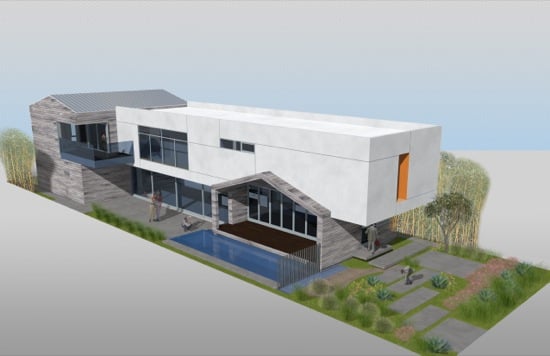
The 360 House - Back yard with new pool and terraced landscaping
The 360 House - Adding volume to the interior
The 360 House will begin construction in Fall 2009. For more on this project, including a project blog, check out the 360 house project page.
Posted by Derek Leavitt on Thu, Feb 26, 2009 @ 12:52 PM
Over the last few days we've been in the process of selecting colors for the interiors of the Fashion Square Car Wash project. While early interior renderings featured colors that were primarily placeholders, now that construction is underway, the time has come to make a final decision. Something that architects often like to avoid.
A Concept for the Colors
As is typical in our work, instead of just picking something that "looks good", we strive to find a deeper meaning or concept behind the design. Since the project is a remodel, we decided to let the original building and its history be our guide.
Mid Century Modern
Since the original modern steel structure was built sometime (we think) in the 1940's, we started to investigate what colors were common at the time the building was constructed. Off to google we went in search of mid century modern architecture colors. Interestingly enough, we found many great examples of popular mid-century color palettes. Two of our favorites are below, showing some of the possible options we are considering:

Eames fiberglass colors used in their ever popular furniture.
Sears vintage paints and stains.
Common Colors
We also actively searched Eichler homes and other mid-century modern examples. Many of the colors pallettes we found from this era contained our preferred colors. Although this is a small exercise in selecting color, we felt it was important enough to search for precedents behind these selections. The goal is not to copy mid-century modern design exactly as it was when constructed, but rather to understand the history and reinterpret these concepts for today's modern world.
We should have a decision on these colors in the next week and will post some renderings not long after.

Posted by Derek Leavitt on Fri, Feb 20, 2009 @ 03:31 PM
Last week at a small ULI meeting I gave an informal presentation on our firm. The presentation was simple; our story, philosophy and a review of a few projects. In a brief Q & A afterward, I was asked a common question: "why does your firm only do modern style work?" I love this question because I feel the answer really defines who we are as a firm.
The first part of the answer is that I don't really consider "modern" to be an architectural style, but more of a way of thinking. So in the simplest terms, to us, "modern" means designing and thinking that are of our time and place.
So in this sense, modern is the absence of style because it has no rules other than being relevant. There is no set style we must follow. A building designed for California will look different than one designed for Colorado. A building designed in 2009 should look different than one designed in 1709.
Example of designing for a place: The Perry Residence - designed for one of the rainiest spots in the USA in Kauai, HI.
So are there stylistic choices we make in our work? Yes, of course, but the primary goals of all of our designs are to relate to their location and to utilize the best available technologies today to make them more efficient and environmentally responsible. Last and definitely not least, our architecture has to relate to the people that will use it in these fast changing modern times.
Posted by Derek Leavitt on Sun, Jan 25, 2009 @ 07:12 AM
The Willow Glen Pool Pavilion was just added to the projects section of our website. Here's a bit about our design approach to this unique project:
The Slope
When a successful young professional came to Modative
about adding a pool and pool house to his property in the Hollywood
Hills, we thought it was a pretty straight forward request. That was,
of course, until we saw the property in person.The existing modern home
which sat at street level was immediately followed by a steep 45 degree
downslope. As a site for a pool, it was not ideal, but as we enjoy a
good challenge; we saw this as an opportunity to design a dynamic
solution that would provide the client's request for valuable outdoor
space in an unlikely place.
Blending In
The
client had few requests, but one was that the pool pavilion be pretty
well hidden from the house above. Our solution was to landscape the
roof having it appear as an extension of the sloping side. This green
roof not only helps disguise the building from above, but reduces
runoff, heat island effect, and provides insulation to keep the
pavilion cool in summer months.
Here Comes the Sun
The steep slope also provided difficult solar challenges. To discover the optimal location for the pool, Modative
did thorough computer solar simulations with numerous schemes,
eventually settling on a pool and deck location that get the most sun
possible.
A Special Place
The pool is designed
with an infinity edge that floats over the drop off allowing for
uninterrupted views from the dramatic hillside location. The main space
of the pool pavilion is designed for flexibility. Multi-track sliding
doors pull back at the corner, opening up the room to the outdoors. The
pavilion's wood-clad bathroom was given equal attention. Accessed via
stepping pads in the pool, the bathroom also takes in the view from
it's oversize shower.
A Vertical Journey
Because
of the intensity of the slope, the pool was located several flights of
stairs below the house. Resting points, viewing platforms and changes
in direction help compensate for the long vertical journey from the
house down to the pool. The main view point along the stair, a
projecting landing, was envisioned to double as a DJ booth for parties.
Visit the Willow Glen Pool Pavilion project page
Posted by Derek Leavitt on Thu, Jan 10, 2008 @ 10:32 AM
My brother, the developer (Grant) is in the New York Times today. The photo above is from the article.
See Article Here
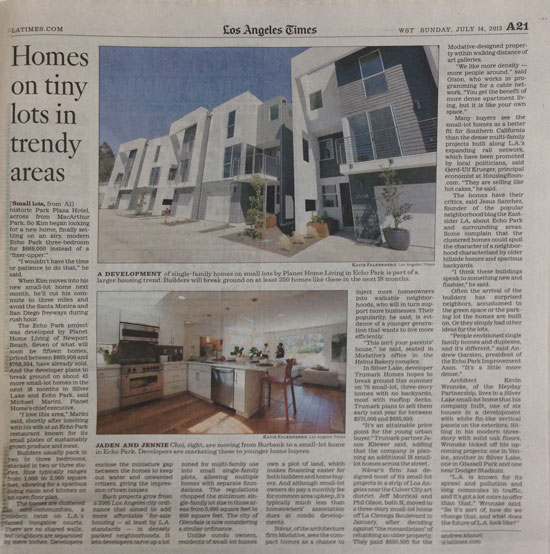
Lorcan O’Herlihy (Architect) and Richard Loring (Developer/Builder) did a nice job with this project; another example that there is still quite a market for modern multi-family housing in Los Angeles.
-
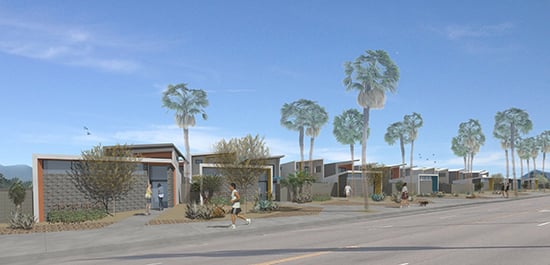
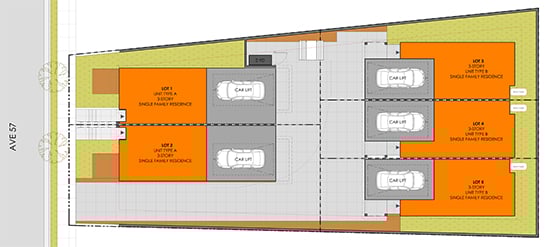
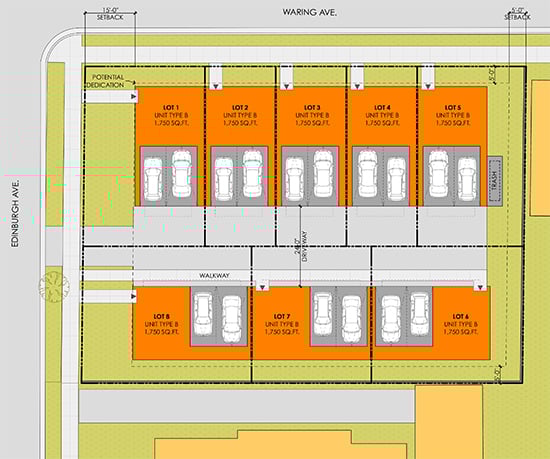
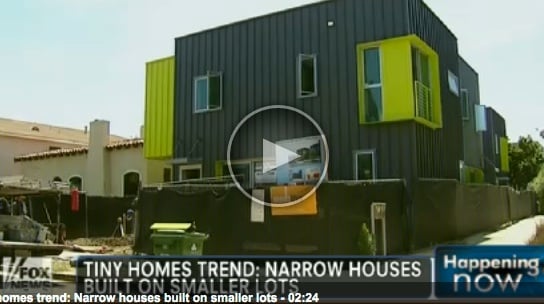
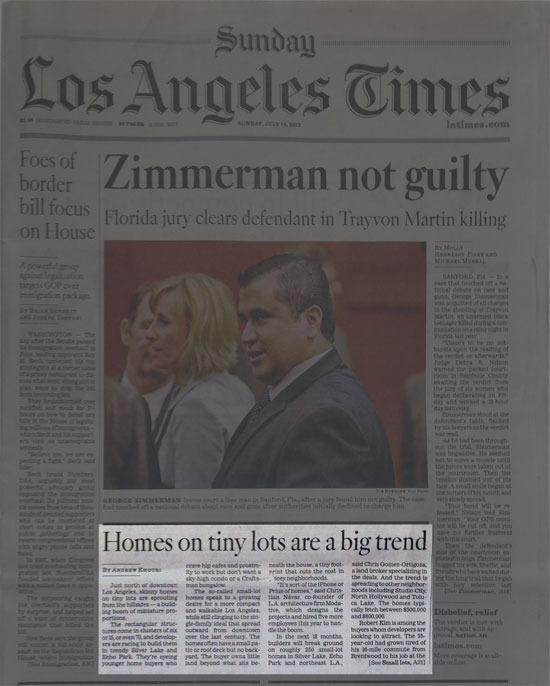
My brother/Pacific Beacon Properties, LLC and Modative are currently developing/designing a six-unit housing project on Venice Boulevard here in Los Angeles utilizing the new small-lot subdivision ordinance. Even with the current housing slow down, we are enthusiastic about the future of these type of developments.