Posted by Derek Leavitt on Thu, Jun 10, 2010 @ 04:52 PM
If you've been following along with us here over the last few weeks, you've surely noticed that we've been bashing open architecture competitions and even suggesting alternatives to these time wasters.
So you may find it a bit hypocritical that today I'm announcing that we won a competition. That is, until you note the following differences between this competition and a typical open architecture competition.
Not Just an Architecture Competition
The competition we entered was through the Urban Land Institute (ULI) to develop housing for the chronically homeless. As I posted back in April, it was a team development competition consisting of other young real estate and social work professionals. Architecture was only a piece of the proposal. Our team had to find a property, create a program, design a project, determine the services offered, and develop a detailed pro forma of how the project would be financed. The process simulated a real project compressed into six weeks.
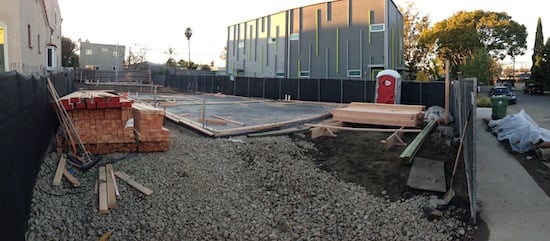
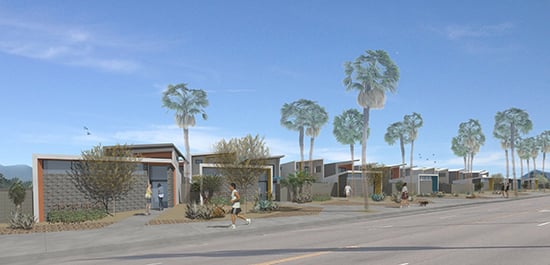
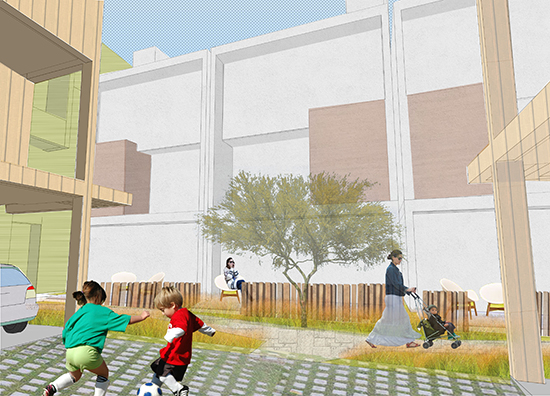
The site we selected in Glendale.
The Competition Wasn't Open
Our team had to apply in order to get accepted to participate. There were only five teams competing.

We even got to make our own cool logo. We were called Team HETED (Homeless Empowerment Through Efficient Development)
Collaboration
Each team was assigned a city to work with in Los Angeles County: Pasadena, Whittier, East Dominguez Hills, Long Beach and our sponsor city, Glendale. We also worked closely with homeless non-profit advocates and developers, Path Achieve Glendale
and Path Ventures. The city and these organizations acted like our clients. By working with them we got to make real connections. Connections that could lead to future work.

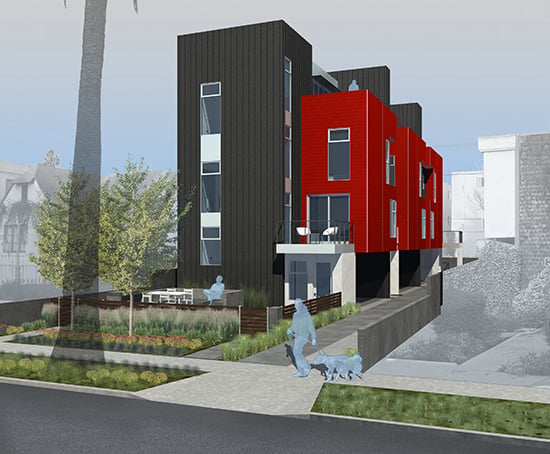
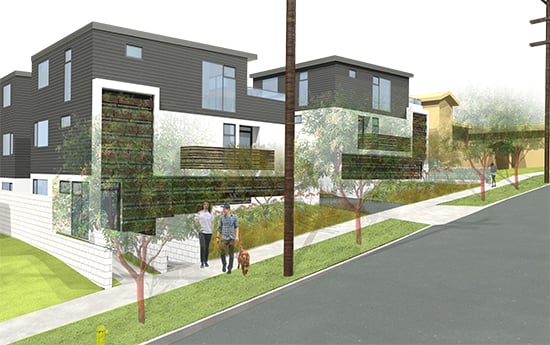
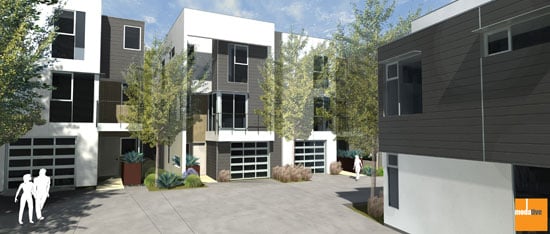
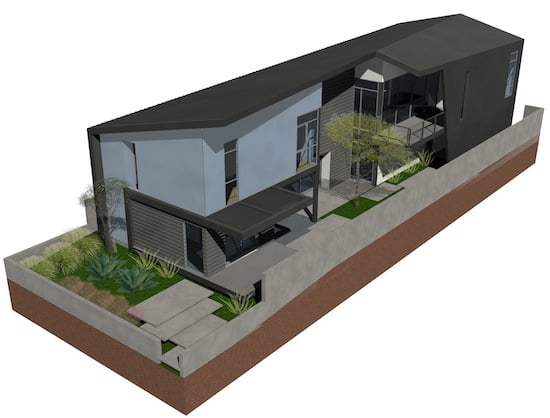
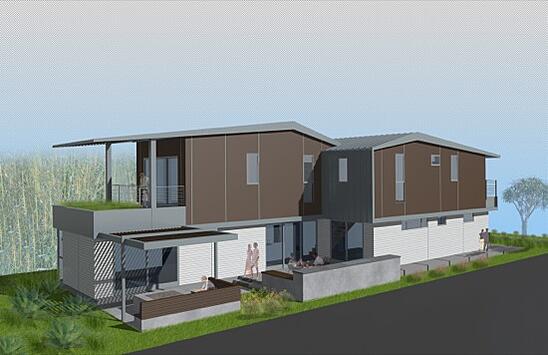
The project concept is a hybrid of preservation of 1920's bungalows and modern intervention of adding new elements to bring the project up to code and provide services for the residents.
Team Aspect
Our team really enjoyed working with each other on this. I think we will collaborate again on future projects.
Exposure
The Urban Land Institute is a diverse organization. It reaches all types of real estate professionals. We prefer this type of exposure over showcasing our work to a bunch of fellow architects.
Pro Bono
This competition was our launch into pro bono work. We spent 130 hours working on this competition. This gives us a real gauge as to the level of commitment required to do future pro bono projects. We already have an idea for our next pro bono project. It won't be through a competition.
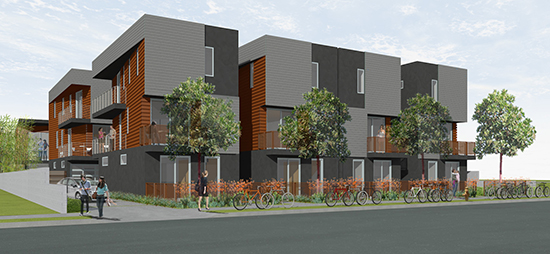
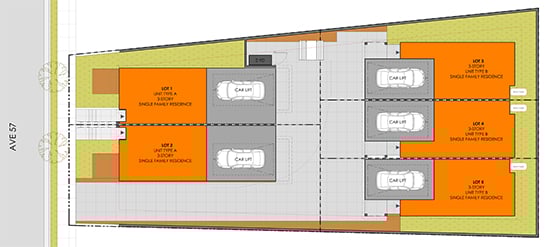
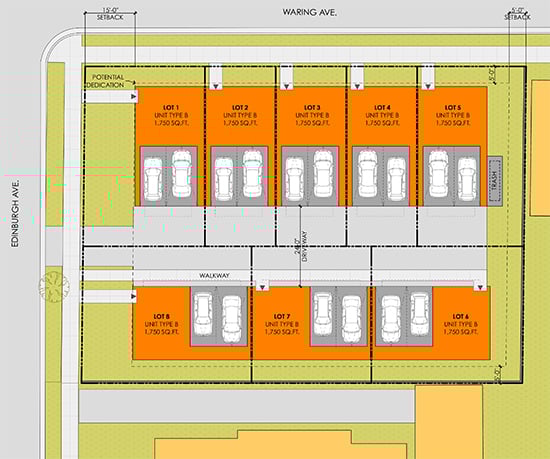
Overall view of the project
Whether or not you buy our arguments for entering this competition, I encourage you to check out our winning proposal. You can also view our online press release.
What do you think of our proposal?
Posted by Derek Leavitt on Tue, Jan 05, 2010 @ 11:07 AM
As a follow-up to our last post, 7 Tips for Starting an Architecture Firm - Tip 03: Get Advice , I thought I'd touch on a related marketing strategy, a big secret:
Aside from gaining valuable information, your start-up advisers are also your best marketing source.
When starting an architecture firm, trust can be difficult to attain. This is especially true if, like us, you start your firm at a relatively young age. When you launch, you'll have very little to show potential clients. So while you can and should show potential clients work you completed while working for other firms (see How a Young Architecture Firm Can Show Its Experience), in all likelihood, your first projects will come from people you have a prior relationship with - such as the people you're asking for advice.
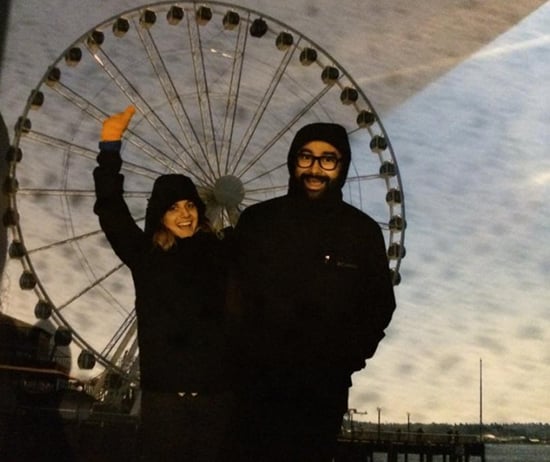
Just thought this post could use a pretty picture. It was either this or a cheesy stock photo of business people shaking hands.
Asking for advice is a great way to meet with people, let them know you're starting your own business, and gain their trust, all while not seeming like you're looking to gain anything other than free advice. So while marketing your new firm may be secondary to getting advice, there's a good chance you may get some projects out of it. We did.
Posted by Derek Leavitt on Tue, Oct 27, 2009 @ 11:26 AM
When discussing licensed professionals here in the USA, architects are still a bit of a mystery.
Surely you've seen enough doctor shows to get a feel for the intern/resident/attending path for doctors.
This group has been educating us on what it takes to be become a licensed doctor in dramatic, scandalous fashion.
You probably also know a law school graduate who's disappeared into study mode for the bar exam?
But what about architects? How do architects become licensed?
Is this still how the public perceives architects? It would really hurt my back to work like that. Image from "architect" wikipedia page.
There Aren't Many Architects
Don't feel alone if you are uncertain how one becomes an architect. Many architecture students and even some in the field, don't have a grasp on the licensing process. One of the reasons for the mystery is simple: there aren't many architects. Even in the most populous state of California (my home sweet home), there are far fewer licensed architects than lawyers and doctors.
So, before we get started on how to become a licensed architect, here are two things to keep in mind:
- There are national standards, but every state issues their own licenses and sets their own requirements.
- The process continues to evolve. By the time I'm done writing this, they've probably added another test or internship requirement.
The Four Basic Steps to Becoming an Architect
1. School
As you would expect, you'll most likely need to go to school. Not just any school, but an accredited program. There are currently about 150 accredited schools. To find one, you can start by checking with the National Architectural Accrediting Board.
There are a few types of degrees that you can get in architecture that qualify:
- Bachelor of Architecture (BArch)- Your basic, intense-limited-sleep-and-social-life-most-of-your-courses-are-predetermined, undergraduate university degree. I graduated with one of these degrees about 10 years ago and although I'm not as bitter as I may sound, I am still tired. Also note that BArch programs are five-year programs, so tack on an extra year of tuition compared to a typical major.
- Master of Architecture (MArch)- You don't need an undergraduate architecture degree to apply for a graduate degree, but there are masters programs that are shorter for those that already have a BArch degree.
- Doctor of Architecture (DArch)- If you decide to become one of the dozen people in the world that have one of these rare degrees, then you are too smart to be reading this blog. Move along.
2. Internship
If you still want to be an architect after school, you'll need to get a job working for an architectural firm. While you work for (often little) money, you'll be completing your internship hours. There's a system to this internship madness and it's called the Intern Development Program (IDP). The bad news is that IDP involves documenting work hours. The good news is that IDP's intention is good: to give young professionals a well-rounded experience in the architecture field.
IPD completion requires 700 training units (8 hours per unit) divided into 16 or so categories that cover a diverse spectrum of what architects do. This program is intended to better educate interns and prevent young professionals from being abused by only giving them repetitive tasks (stair details anyone?) that do little to provide the necessary real-world education.
Some states also have extra internship requirements (such as California), so be sure to check with the state architects board.
3. Testing
Long gone are the days of prospective architects taking a four-day paper and pencil exam administered once a year. Since 1997, national testing has been computerized, offering candidates the "opportunity" to take the different portions of the exam in any order and at any time they can get an appointment at the local computer testing center.
The national tests, or Architect Registration Examination (ARE) as they are known have multiple divisions or tests that must all be passed. When I took the ARE, there were nine tests that I took sporadically over several years as I found time to study while also working full time. There are now seven divisions, with combinations of multiple choice, fill-in-the-blank, and graphic portions, which require test takers to draw and create layouts in a CAD-like program.
Some states also have additional testing requirements such as California's Supplemental Exam. I took this unpopular, formal, oral formatted test and it was not fun. Good news for California architects-to-be is that there are rumors that the California Architect's Board is changing the oral format of the exam.
4. Licensure
So, once you've completed the above three steps, you'll need to register (meaning pay a fee) with your state (or multiple states) and verify completion of the requirements. Once you're licensed, you can officially call yourself an architect.
Architects can put the initials R.A. (Registered Architect) after their names, but it's more common to see AIA (American Institute of Architects), meaning they're a member of the national professional association for licensed architects.
Many states (and the AIA) have continuing education requirements, which means architects have to document educational hours in topics relevant to the profession to renew their licenses.
So...
After outlining all of these steps, the question becomes, is it more difficult to become a licensed architect, doctor or lawyer?
Posted by Derek Leavitt on Sun, Jan 25, 2009 @ 07:12 AM
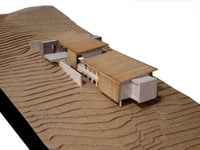
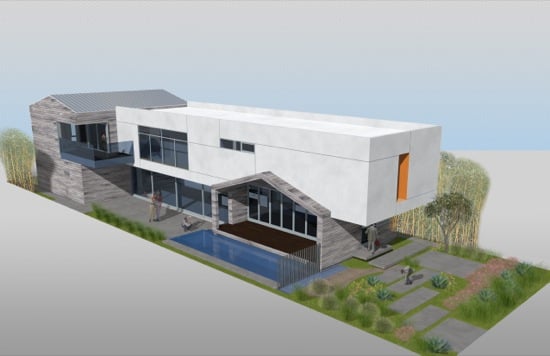
The Willow Glen Pool Pavilion was just added to the projects section of our website. Here's a bit about our design approach to this unique project:
The Slope
When a successful young professional came to Modative
about adding a pool and pool house to his property in the Hollywood
Hills, we thought it was a pretty straight forward request. That was,
of course, until we saw the property in person.The existing modern home
which sat at street level was immediately followed by a steep 45 degree
downslope. As a site for a pool, it was not ideal, but as we enjoy a
good challenge; we saw this as an opportunity to design a dynamic
solution that would provide the client's request for valuable outdoor
space in an unlikely place.
Blending In
The
client had few requests, but one was that the pool pavilion be pretty
well hidden from the house above. Our solution was to landscape the
roof having it appear as an extension of the sloping side. This green
roof not only helps disguise the building from above, but reduces
runoff, heat island effect, and provides insulation to keep the
pavilion cool in summer months.
Here Comes the Sun
The steep slope also provided difficult solar challenges. To discover the optimal location for the pool, Modative
did thorough computer solar simulations with numerous schemes,
eventually settling on a pool and deck location that get the most sun
possible.
A Special Place
The pool is designed
with an infinity edge that floats over the drop off allowing for
uninterrupted views from the dramatic hillside location. The main space
of the pool pavilion is designed for flexibility. Multi-track sliding
doors pull back at the corner, opening up the room to the outdoors. The
pavilion's wood-clad bathroom was given equal attention. Accessed via
stepping pads in the pool, the bathroom also takes in the view from
it's oversize shower.
A Vertical Journey
Because
of the intensity of the slope, the pool was located several flights of
stairs below the house. Resting points, viewing platforms and changes
in direction help compensate for the long vertical journey from the
house down to the pool. The main view point along the stair, a
projecting landing, was envisioned to double as a DJ booth for parties.
Visit the Willow Glen Pool Pavilion project page
Posted by Derek Leavitt on Tue, Jan 06, 2009 @ 09:21 AM
One important thing as a young architecture firm (Modative turns three early this year) is to give your current and future clients a real sense of your experience in the field. As in any profession, especially one that involves the complexities of designing buildings, displaying competence through experience (in this case photos of actual buildings) is critical.
The difficult part, however, when your firm is still young, is that the architecture and construction process takes time. This means that it can take years (and it does) to accumulate a portfolio of built projects.
This is why when we founded Modative we decided that our website should not only show our projects that we have designed since forming Modative, but to also show projects that we played a major role in while working in prior offices. This allows us to display projects that have gone through the entire process, meaning that they are built; as well as show the wide range of project sizes and types that we have experience with.
So, three years in, this is why we still like to show the Project Experience portion of our Projects page. We hope it gives you a proper feel for the types of architectural projects we have helped realize and level of experience the three founding partners had prior to forming Modative.
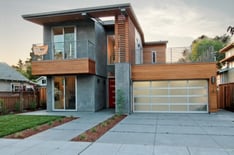
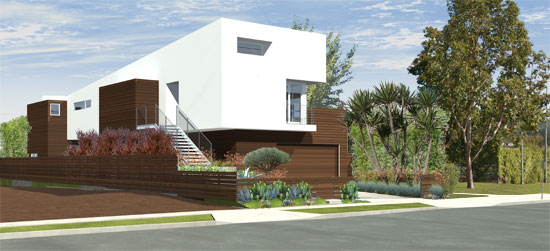
The following is a project that Christian and I designed and managed while in a prior office.