a modern architecture firm

modern architecture blog

a blog about modern architecture, design, development + modative happenings
 
Loading

We post, you get an email. That's it.

Your email:

blog authors

contact us

call modern architects

blog voter

Find interesting posts from the past. Vote. Check out our new blog voter.

browse by tag

architecture blog

Current Articles | RSS Feed RSS Feed

Architects Answering the Important Questions


People often contact Modative about a project they have in mind, but they are often unsure of how to get started. Common questions we receive are:

  • How much will it cost?
  • What will the city allow us to do?
  • How much square footage can I build?
  • Is it feasible?
  • How many units can I build?
  • How much parking do I need to provide?
  • What is the process?
  • How long will it take to permit or build?
  • I have a lot / want to buy a lot / want to lease a property. What can I do with it?

Modative was recently contacted by two individuals who posed many of the questions listed above. The first individual was a long-time business owner with a hard-to-lease commercial auto body shop in Los Angeles. The second was a young entrepreneur looking to find a property in order to open a new restaurant/bar concept. With both of these clients, their long term plans were contingent upon taking really important first steps to decide what to do with the property they own/lease/were looking to purchase or lease.

los angeles bar architect

Our services often include conceptual renderings like this one for the aforementioned restaurant/bar in Los Angeles. These renderings are valuable tools for our clients (and their investors) to envision the project's possibilities.
Since the economic climate has shifted downward so dramatically, more and more of our clients are requesting that we provide answers to important questions in order to guide them in the decision-making process before they spend too much of their cash reserves. In our ongoing efforts to give people insight into the helpful services we provide here at Modative, we’d like to share a service in which several of our recent clients have had a particular interest: Site Evaluation and Planning Services.

The beauty of our Site Evaluation and Planning Services is that within a few weeks, for a smaller financial commitment, we can provide valuable insight into what can be done with a property. The level of detail provided in our analysis is catered to the clients specific needs. Some just want the basics, like of what uses are allowed and the code restraints, while others want a more detailed investigation, like program development, preliminary layouts, conceptual renderings, and even preliminary budget analysis of construction and soft costs (architectural, consultants and city fees).

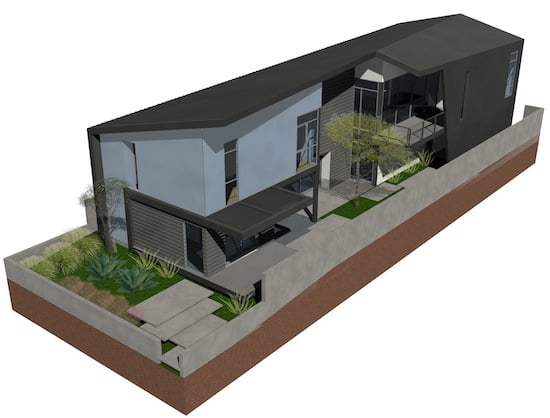
los angeles office rehab architect

A descriptive 3D Plan we provided as part of the Site Evaluation and Planning Services for an auto body shop conversion into office commercial.

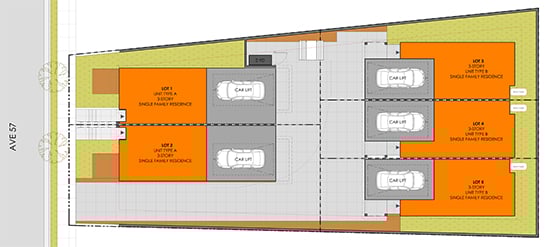
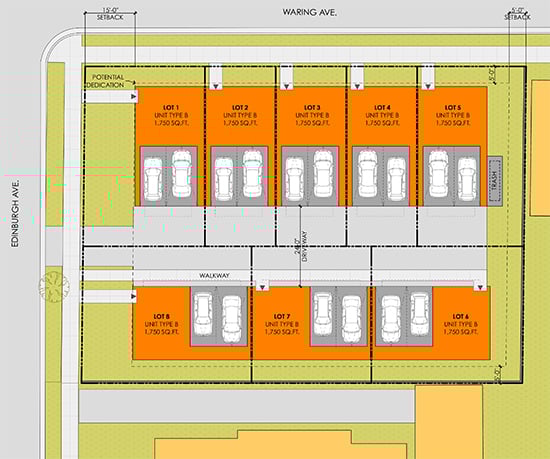
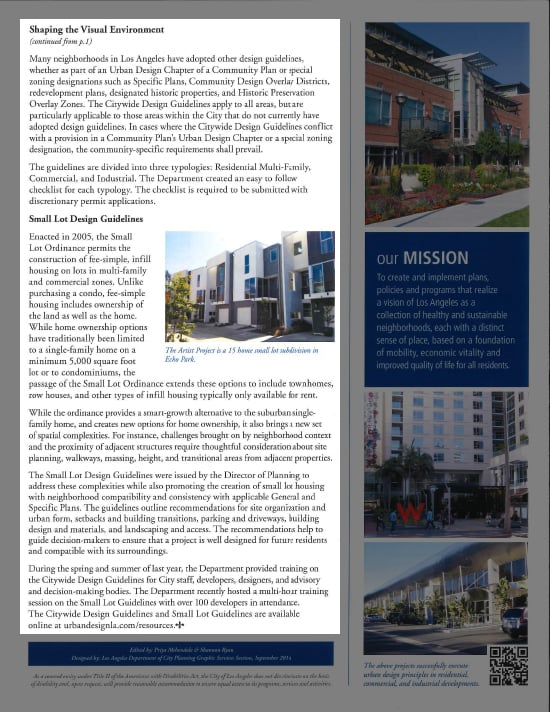
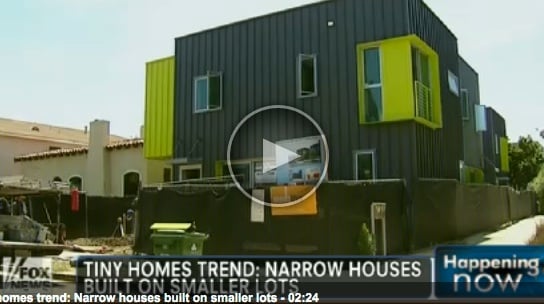
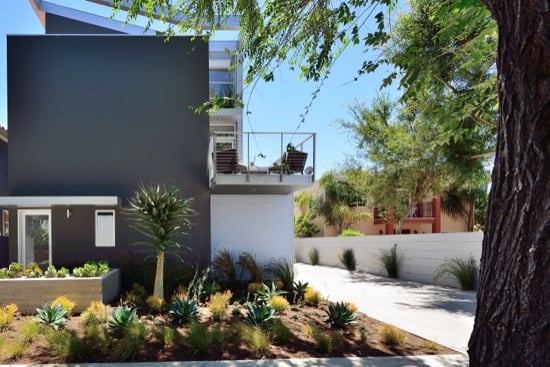
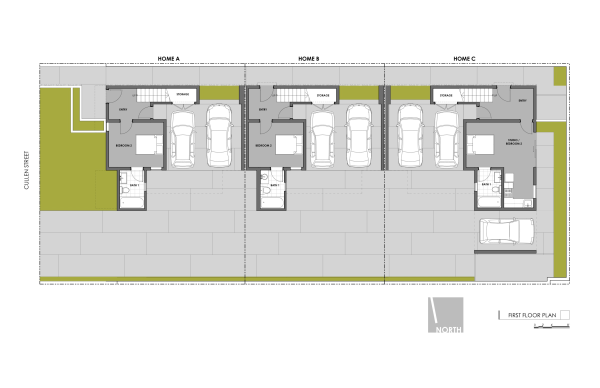
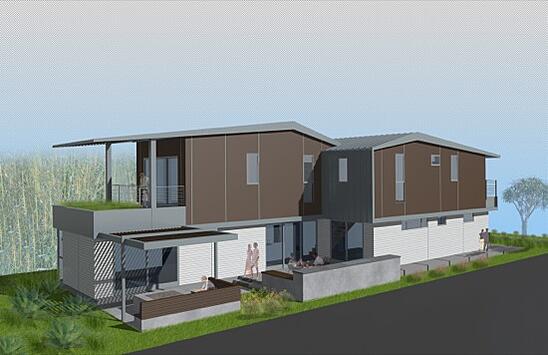
While we frequently provide these services for ground-up projects such as Residential Small Lot Subdivision projects, we also do quite a few for residential and commercial rehab and remodel projects.

Check out our Site Evaluation and Planning Services page to download a sample report we developed for a commercial rehab project and learn more about how these services are a great way to get a project started without a huge upfront commitment.


Download a sample Site Evaluation and Planning report:

site evaluation  

Site Evaluation + Planning Services

A sample case study of a commercial rehab and former auto body shop in North Hollywood, California.


Contributors to this post include Derek Leavitt, AIA, Michael Scott and Krystal Návar.


4 Reasons to Become a Fan of Modative Architecture on facebook


1. You Like Christian, Michael and Derek (the founders of Modative)

You want them to succeed.

You'd invest in their company if people were actually foolish enough to invest in architecture firms. Becoming a fan on facebook will be your investment.

Becoming a fan of Modative Architecture now is like buying Apple stock back in 1996, days before Steve Jobs returned. If you did that back then, you'd now be a kagillionaire. So, joining the Modative train now will get you some serious internet clout when we get around to designing the architecture equivalent of the ipod.

modative founding partners

Hey, they seem like nice, upstanding citizens. I think I'll become a fan of their architecture firm.

2. You Hate Christian, Michael and Derek

You can't wait to see them fail.

You dislike them personally, their silly modern architecture and everything else they stand for. All great reasons to become a fan. It'll be like having front row facebook tickets to their demise.

architects political ad

I don't know. That's a pretty grainy political-ad-style photo. I can't wait to become a fan and watch their architecture empire crumble.

3. You Need Culture in Your Life

Actually, you don't need culture. You need the appearance of culture.

When your ex from high school finds you on facebook, they will dissect your profile, finding clues to the level of your lameness. Like it or not, you'll be defined by the pages on your profile. It could get ugly. But alas, there between the "Britney Spears Fan Page" and "Ground Beef Taco Lovers Club" they find a gem - "Modative Architecture". Bingo.

Wow, my ex follows a modern architecture firm. That's some serious culture and sophistication.

Little do they know, you consistently turn down invites to art gallery openings to stay home and watch bad reality TV shows in your underwear.

It's the appearance of culture we're after here people

4. It's a Low Maintenance Relationship

You know your random facebook acquaintance with the horrible band. The one that asked you to become a fan of their group. You gave in. Big mistake.

Now you're bombarded with daily group updates clogging your news feed:

"Check out our new song on MySpace called 'Pig's Lair'"

"Vote for us like a bagillion times in this useless online contest"

"Come rock out with us at our Tuesday night gig at Malloy's in Salinas, CA"

Salinas, seriously?

At Modative we won't spam up your news feed. Why? because we're too busy drawing buildings and other important architecture stuff. Complex, technical stuff.

We rarely update. And when we do, we'll be just as easy to ignore as the rest of your group/page updates.


So, if you're ready to make this minor commitment, you may facebook (used as a verb) us here -  Modative Architecture on facebook


Craving more social media madness?

Follow Derek's frequent twitter updates here - @architectderek

Wait for Christian's rare tweets here - @modative_navar


Or, if you want the appearance of culture in your inbox, subscribe to this architecture blog to recieve an email every time we post.


7 Tips for Starting an Architecture Firm - Tip 05: Start and Stay Small


This post is part of the How to Start an Architecture Firm series.

In February 2006, Christian, Michael and I went to work on forming our own architecture firm. The following is tip number five of seven in our start-up strategy.

Tip 05: Start and Stay Small

Small Architecture Firms

photo credit

I've never been a fan of large companies. It's probably because I've never worked for one. Before founding Modative, I worked for three small- to medium-sized architecture firms. Christian and Michael have similar experiences, learning the architecture business in offices where you had to do it all. There was no way to pass along unwanted tasks or hide amongst hordes of CAD stations.

Christian always jokes that in one office, the first thing the boss asked him to do on his first day was to take out the trash. Experiences like this are humbling, but also critical to developing the kind of discipline it takes to start your own architecture firm.

If I don't do this myself, it won't get done.

A philosophy that clearly ties into Tip 02: Do it Yourself.

Growing a Company on Fact vs. Faith?

Many people set out on their own with intentions of growing their offices fast. Far too often, this growth is unwarranted.

Are you hiring people because you can't possibly complete your long-term billable work with your current staff?

Or, are you hiring in a panic because you momentarily feel overwhelmed at a perceived inundation of new projects in the office?

Even worse, are you hiring so you can tell people at dinner parties that your office has X number of people or so you don't have to work more than 40 hours a week?

We have faced all of these situations here at Modative. To expand or not to expand. I credit our frequent internal debates amongst my partners and I to keeping our company small and responsible when it comes to hiring.

It would have been far too easy in our founding year (2006) to grow our company based on faith in the booming economy. But as this glimpse of the U.S. stock market shows over our first three years in business, we made the right call to base our growth on fact rather than faith.

architecture firm growth


Technology Enables "Smallness"

When I graduated from architecture school 10 years ago, most firms were organized in a much different fashion. Architecture offices relied on larger project teams to complete the labor-intensive production and coordination that 2D CAD (and even some hand drafting) required. As technology improved, these old-school firms had a tough time changing. Their principals, often from a generation that didn't grow up with computers, would eventually come to embrace new technology, but in a slow evolutionary way, dragged down by large production-based staffs. It has taken 10 years for many of these old-school firms to evolve into technology. Many of them still resist.

Having three founders that grew up with computers and rapid technology changes, our firm was founded with a much different mentality. We embrace technology because it enables us to remain small. Our new-school firm can accomplish the same amount of work with one person that an old-school firm needed 4-8 people to complete. These two technologies help make this possible:

ArchiOffice

This program is the key to keeping us organized. It's a management system for our projects, contacts, time cards, calendar, billing and much more. Check out a prior post where I describe our ArchiOffice use in more detail.

architecture office mangement software

A screenshot of the ArchiOffice dashboard.

ArchiCAD

I've worked with ArchiCAD, our CAD software here at Modative, on and off for nine years. ArchiCAD's BIM (building information modeling) technology enables "smallness" by taking much of the grunt work out of drawing production, allowing us to focus on creativity. Virtually constructing projects before they are built not only creates pretty pictures to show our clients, but it also drastically reduces expensive construction conflicts.

los angeles architects bim software

An example of how our virtual building models contain information on the structural systems, reducing potential drawing errors.


Stay tuned as we fill in the last two tips of our 7 Tips for Starting an Architecture Firm.

los angeles modern architecture firm

7 Tips for Starting an Architecture Firm

00 architect firm

00 Bootstrapping

Not a tip, but a critical theme in our start-up adventure.

posted 12.03.09

01 architect firm

01 Be Cheap

posted 12.08.09

02 architect firm

02 DIY (Do It Yourself)

posted 12.18.09 

 
03 architect firm

03 Get Advice

posted 12.22.09

04 architect firm

04 Learn from the Bad

posted 01.22.10 

05 architect firm

05 Start and Stay Small

posted 03.03.10 

06 architect firm

06 Stay Flexible

posted 04.05.10
07 architect firm

07 ___________________________

Want to stay up to date as we post the 7 Tips to Starting an Architecture Firm?  Subscribe to this blog by adding your email to the subscribe form on the right.


How to Start an Architecture Firm - Introduction


As many architects continue to struggle to find employment, some are deciding that the only way to get back into the game is to start their own firms. For this reason, I thought it'd be an appropriate time to share the story of how Michael, Christian and I founded Modative back in 2006.

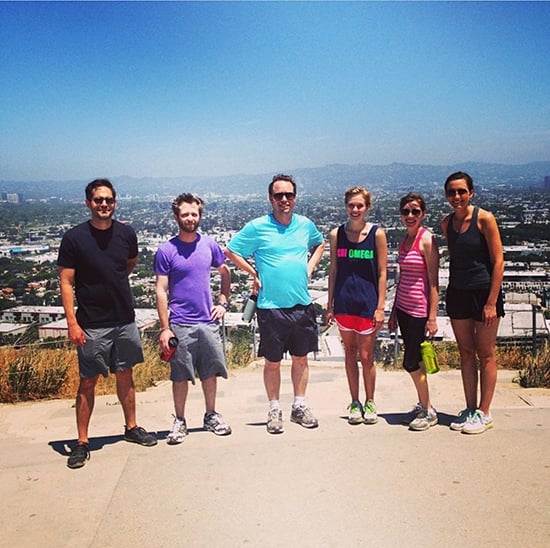
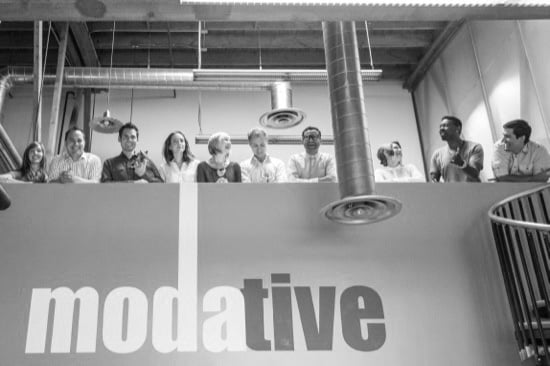
modern architect foundersModative's founders, February 2006, at the Disney Concert Hall in Los Angeles celebrating at the end of our last day working for other people.


In the last few years, we've lectured a few times at USC's School of Architecture and the Urban Land Institute (ULI)on how to start an architecture firm. The lecture has improved a bit with each iteration, to the point where I feel it's now worth posting. Enjoy.


What is Entrepreneurship, Really?

Starting your own firm is really more about being a good entrepreneur than being a good architect. And since most architects have little education or experience with entrepreneurship, they often make the following false assumptions about what it will be like to have their own firm.

Entrepreneurship Misconceptions

Our goal is to tell our start-up story - the unglamorous version. And while it won't apply to everyone looking to start their own firm, there are some key lessons for inexperienced entrepreneurs (like we were) looking to make their move.


Bootstrapping

Even though we didn't know it at the time, our approach to starting our firm was very much in line with what is known in the business community as bootstrapping.

You may be familiar with the saying, "Pull yourself up by your bootstraps". As it refers to business, bootstrapping is starting a business venture without external help and/or money.

Our seven tips for starting an architecture firm will cover how we bootstrapped our way from being three inexperienced entrepreneurs to three owners of a (nearly) four-year-old architecture firm.

bootstrapping architect start upimage source

7 Tips to Starting an Architecture Firm

Following this introduction post, our story will be organized into seven key tips for starting an architecture (or any other creative) firm. See the graphic below for hints as to what each of those seven tips will be.

Stay tuned over the next several weeks as we fill in the blanks on our 7 Tips for Starting an Architecture Firm.

los angeles modern architecture firm

7 Tips for Starting an Architecture Firm

00 architect firm

00 Bootstrapping

Not a tip, but a critical theme in our start-up adventure.

01 architect firm

01 Be Cheap

posted 12.08.09

02 architect firm

02 DIY - Do It Yourself

posted 12.18.09   
03 architect firm

03 Get Advice

posted 12.22.09
04 architect firm

04 Learn from the Bad

posted 01.22.10  

05 architect firm

05 Start and Stay Small

posted 03.03.10 

06 architect firm

06 Stay Flexible

posted 04.05.10
07 architect firm

07 ___________________________

Side Note: As an experiment, the images for each tip above were selected by typing the tip phrase (e.g., bootstrapping) into google images and selecting the most appropriate image from the first page. I think the experiment garnered some interesting results.

google images experiment


Want to stay up to date as we post the 7 Tips to Starting an Architecture Firm?  Subscribe to this blog by adding your email to the subscribe form on the right. We never spam our fine followers and if later on you discover you hate our guts, you can always unsubscribe.


Architects & Creative Professionals : Is It Time To Rethink Your Resume?


Over the past few months I've been thinking a lot about resumes. Actually, I haven't just been thinking. I've been writing a guide to attempt to get architects and other creative professionals to rethink the way they make resumes.

The guide is formatted as 22 quick tips to get you to rethink your resume in your own creative way.

Check out Rethink Your Resume

rethink your resume


Advice for Architecture Job Hunters


Last week we had an interesting question posted to our Ask an Architect feature about the difficulty in finding an architecture job. I thought this Q & A would be helpful to other architecture job seekers out there, especially the less experienced, so here is a reposting of that question and answer.

The Question


How hard, on a scale of 1-10, is it to get a job right after graduating with a Bachelors in Architecture?

The Answer


Good question. A lot of new architecture graduates and young professionals are facing this same issue right now. I wish I had better news, but I don't. Things are tough right now for architecture job seekers. If you want a scale, I would say an 8 in terms of difficulty. Many firms are letting people go or on hiring freeze.
 
However, I'm an optimist, so lets look at some positives given your situation.
 

You Cost Less

Because you are less experienced, you cost less to a potential employer. This means that hiring you is less of a financial commitment versus hiring a licensed architect or someone with 5+ years of experience.
 

You Are Young (I'm Assuming)

Now is a bad time to enter the job market, but things could be worse. You could have just been laid off as an experienced architect with kids, a mortgage, etc. Hopefully you are light on expenses and responsibilities. This gives you flexibility. You could work in another city or overseas where the economy may be better. You may also consider going for a masters, maybe not even in architecture (I recommend an MBA).
 

Part Time

Although many firms are hesitating to hire because of uncertainty, many still have work that needs to be done. You could offer yourself up for some part time work. Tell them no commitment, just by the hour. This is a great way to get in. Before you know it, they could get busier, and they'll turn to you first for a full time job.
 

Freelance

Even less of a commitment for a firm would be to offer yourself as a freelancer. You just need your own computer, software, and a place to work (probably home). Many firms love to outsource because they avoid the commitment and costs of an employee, but still have a place to get work done when they get busy. This may not be ideal for you, but given these hard times, it is a viable option that many people don't consider.
 

New Skills

Recent graduates often have better computer skills than professionals just a few years older. Use this to your advantage. Maybe you even have computer skills outside of architecture, like web design. Many firms utilize down time to redesign websites or reorganize themselves. Show that you can do more than just CAD.
 
Hopefully this gives you a glimmer of hope. Also keep checking back on our web site as we'll be releasing a guide to creative resumes in the coming months. Good luck out there.  


An Architect's Website Breaks from the Norm for the Public's Good


If you've spent any time perusing architect's websites, you'll probably notice one common theme: architects like talking about themselves and their projects. Does this mean architect's are self centered ego maniacs? Well...long pause...not necessarily. Architects, like most businesses, are somewhat obligated to tell you about themselves; show you their work, and give you a feel for if they are the right firm for you.

Unfortunatly, all this "selfish" architect behavior has left us with a world wide web that is pretty void of honest useful advice for all the non-architects out there(ie. our potential clients.) Most people have the feeling that in order to get an architect's help one must hire them first.This approach seems a bit suspect, since few people, have any experience in hiring architects or understanding what it takes to start a project.

So we have to ask ourselves, does all this uncertainty make people want to hire an architect?

The answer: Not really.

This unfortunate reallity has caused us to make a bit of a change to our site here at Modative. A shift away from architecture website norm.


Yes, our site will still mostly be about US with images of projects, profiles of the partners, and a bit about firm philosophy. However, we have added a new section called resources that is dedicated to YOU, our current and (hopefully) future clients. Our hope is that this section will help alleviate some of the uncertainty associated with starting a building project and deciding on an architect. New free resources for non-architects will be added in the coming months that will be available to anyone with a computer and internet access.

An architect's website about you. How's that for some out of the box thinking?


All Posts