Posted by Christian Navar on Tue, Sep 07, 2010 @ 08:15 AM
People often contact Modative about a project they have in mind, but they are often unsure of how to get started. Common questions we receive are:
- How much will it cost?
- What will the city allow us to do?
- How much square footage can I build?
- Is it feasible?
- How many units can I build?
- How much parking do I need to provide?
- What is the process?
- How long will it take to permit or build?
- I have a lot / want to buy a lot / want to lease a property. What can I do with it?
Modative was recently contacted by two individuals who posed many of the questions listed above. The first individual was a long-time business owner with a hard-to-lease commercial auto body shop in Los Angeles. The second was a young entrepreneur looking to find a property in order to open a new restaurant/bar concept. With both of these clients, their long term plans were contingent upon taking really important first steps to decide what to do with the property they own/lease/were looking to purchase or lease.

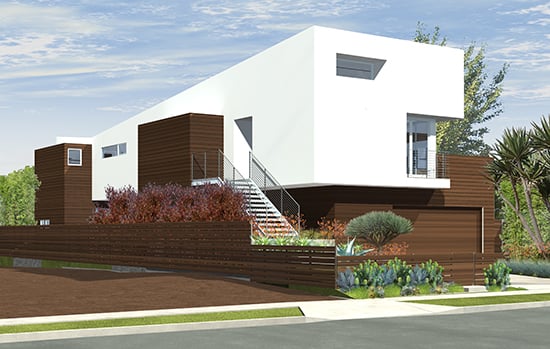
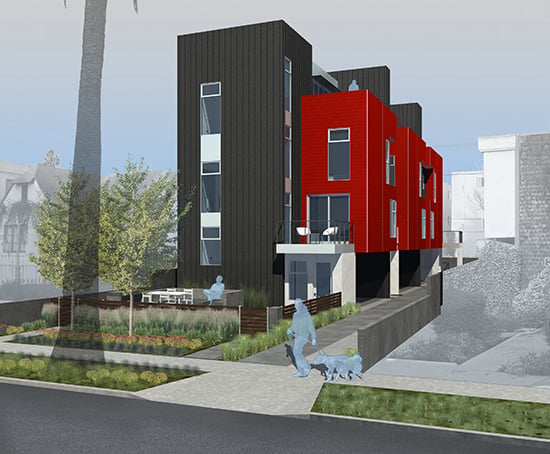
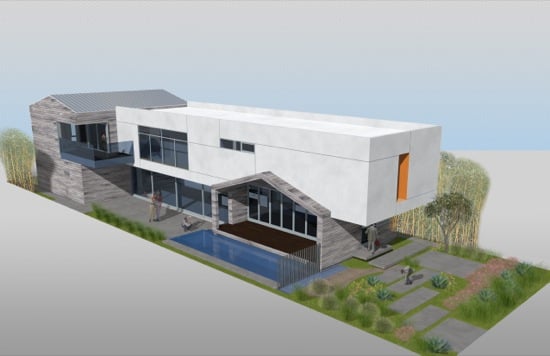
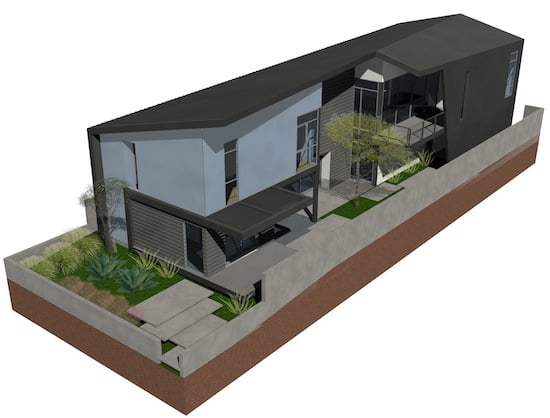
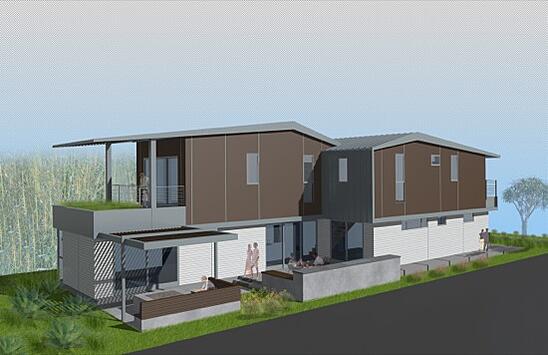
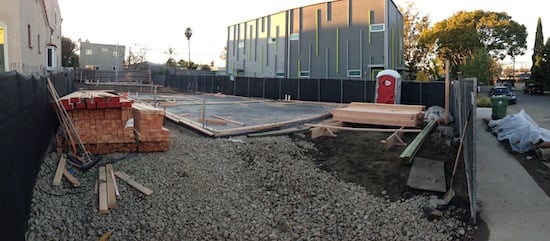
Our services often include conceptual renderings like this one for the aforementioned restaurant/bar in Los Angeles. These renderings are valuable tools for our clients (and their investors) to envision the project's possibilities.
Since the economic climate has shifted downward so dramatically, more and more of our clients are requesting that we provide answers to important questions in order to guide them in the decision-making process before they spend too much of their cash reserves. In our ongoing efforts to give people insight into the helpful services we provide here at Modative, we’d like to share a service in which several of our recent clients have had a particular interest: Site Evaluation and Planning Services.
The beauty of our Site Evaluation and Planning Services is that within a few weeks, for a smaller financial commitment, we can provide valuable insight into what can be done with a property. The level of detail provided in our analysis is catered to the clients specific needs. Some just want the basics, like of what uses are allowed and the code restraints, while others want a more detailed investigation, like program development, preliminary layouts, conceptual renderings, and even preliminary budget analysis of construction and soft costs (architectural, consultants and city fees).

A descriptive 3D Plan we provided as part of the Site Evaluation and Planning Services for an auto body shop conversion into office commercial.
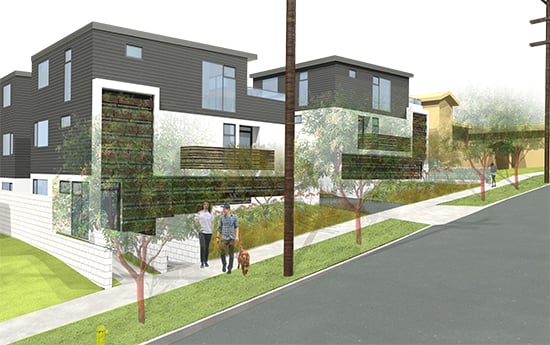
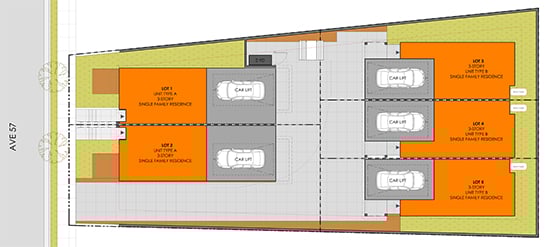
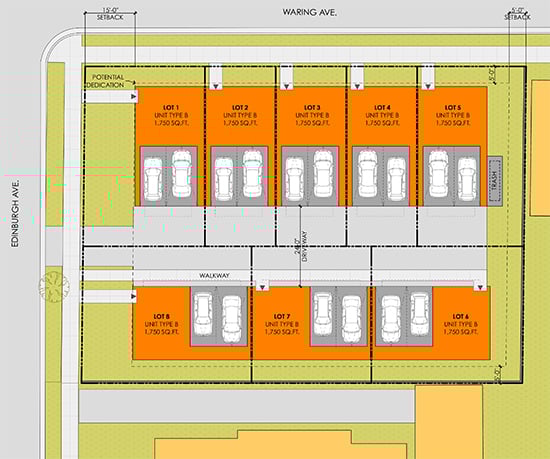
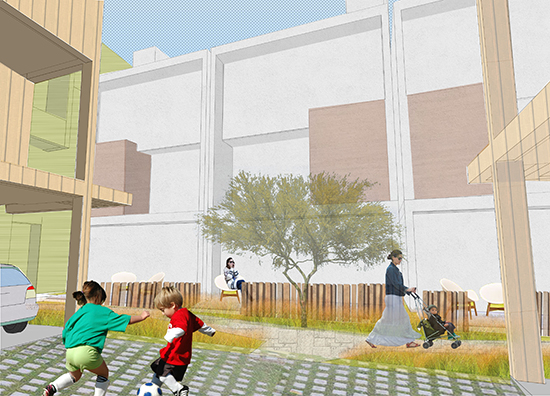
While we frequently provide these services for ground-up projects such as Residential
Small Lot Subdivision projects, we also do quite a few for residential and commercial rehab and remodel projects.
Check out our Site Evaluation and Planning Services page to download a sample report we developed for a commercial rehab project and learn more about how these services are a great way to get a project started without a huge upfront commitment.
Download a sample Site Evaluation and Planning report:
|
A sample case study of a commercial rehab and former auto body shop in North Hollywood, California.
|
Contributors to this post include Derek Leavitt, AIA, Michael Scott and Krystal Návar.
Posted by Derek Leavitt on Tue, Jul 27, 2010 @ 09:31 AM
To us here at Modative, modern architecture is really more about a way of thinking than a style. It's about doing things better, even if it means abandoning old traditional rules. We carry this same critical thinking into the occasional graphic design assignment. An example of this recently occurred with our business cards.
Architect's Business Cards
Four years after our initial order, a few of us were running low on business cards. The natural architect instinct is to redesign the entire card; however, since we're still happy with our logo and look, we decided on only a few minor modifications. Subtracting instead of adding - much like we would do in a building design - eliminating the unnecessary.

No changes to the back of our business card. We like the bold simplicity and abundance of orange that screams "pull this business card out of the jar for the random prize drawing".

The front of our old business cards.
The first subtraction was an easy call: nixing the fax number. Honestly, we don't want faxes. We've contemplated eliminating our fax machine altogether. Anything that can be faxed can be scanned and emailed.
We also considered removing our physical address. The physical address on our business cards has actually been the cause of confusion over the years because it listed our mailing address, not our office location. When we originally designed the cards, we did this intentionally, because we knew we'd move our office a few times in those early years. And we did.
Unfortunately, more than one person has shown up at our mailbox for a meeting. Since we don't want two addresses on the card (too much clutter), we narrowed it down to three options:
- Keep the mailing address
- No address, but have "Los Angeles" to give people a sense of our location
- Go with no address or city and rely on people going to our website to find our two addresses.
Variations of the "Los Angeles" Option. We didn't like the way "Los Angeles" looked on the card. It was as if we forgot the rest of the address.
In the end we decided on Option 3: no address. People have much better access to the web than they did even four years ago when we first printed business cards and our website clearly provides both our office location and mailing address.

The new ultra simple business card sans fax and address.
Integrating Graphic Design and Architecture
We enjoy graphic design, especially when it's integrated into the architecture, like the graphics work we did as part of the Fashion Square Car Wash remodel.

New sign graphics designed by Modative.

The old sign

Simplifying the signs at the welcome canopy.

The old cluttered welcome canopy.
For the Fashion Square Car Wash, we designed all of the signs and graphics, including business cards, coupons and staff shirts.
We've found that providing our clients with graphic design as part of our beyond architecture services provides for a strong consistency between the graphics and architecture, making for a successful project.
Contributors to this post include Christian Návar, Michael Scott and Krystal Návar.
Posted by Derek Leavitt on Tue, Jun 08, 2010 @ 11:06 AM
A few weeks back, Bob Borson, AIA asked me to do a guest post on his Life of an Architect blog. Bob's blog is a favorite of mine and one of the few architecture blogs I follow regularly. The post, titled Rules for an Architect's Blog, is about the history and philosophy of our Modative blog.
The post even briefly covers the blogging history of some of architecture's greats like Frank Lloyd Wright.
I encourage you to check it out and stay for a while. Bob's blog is full of great content for both architects and those trying to learn more about architects.
Posted by Derek Leavitt on Wed, Jun 02, 2010 @ 10:17 AM
Obviously, not everyone agrees with our last post "Why Architecture Competitions are Bad for Architects". A day after our post, archdaily, posted "Why open architecture competitions are good for Architects, a counter argument".
The archdaily post, some blog comments, and a few twitter posts claim that our argument against competitions is an attack on creativity and passion within the architecture profession. This couldn't be further from the truth. A few questions to ponder:
Do open competitions have a monopoly on creativity?
Are competitions the only way to progress the architecture profession?
Absolutely not.
Open architecture competitions actually take much of the creativity out of what architects do. They provide everything: the site, program, objectives, and deadlines. Then they judge your work in private, without any back and forth collaboration.
It's comforting for architects to have all of this delivered to them. It's exactly how architecture school works. All the architect has to do is design in a bubble. I can certainly see the appeal.
Many architects will never be convinced that open competitions are bad for them and that's fine. But I would feel bad ripping on open competitions without providing some viable alternates.
Architects will at some point inevitably find themselves with free time and/or needing a release from the daily grind. Instead of doing what architects have traditionally done (open competitions), consider one of these options instead:
1. Pro Bono Architecture
Pro bono work is more rewarding and has far more upside than an open architecture competition. And there are plenty of non-profit organizations that need an architect's help, but can't afford it.
The 1% program website is a great starting point to learn about pro bono architecture and connect with with non-profits looking for architects. The 1% program asks that you donate at least 1% of your time to providing free or deeply discounted design work. In exchange, you get a rewarding experience working with people and building connections. Your work is also likely to be constructed and the publicity and experience you'll receive can lead to future paid commissions -often times in project types where you previously had no experience.
2. A Design Intervention
This is how the 1% program got started. Public Architecture, a firm in San Francisco, decided that instead of entering another pointless competition, they would use that time and energy to improve their neighborhood through actual design interventions. They took an unused portion of the street and made it a temporary public park. The project was built with donated materials and labor. The neighborhood praised their efforts and the Mayor of San Francisco spoke at the project's opening. Now that's a great use of an architect's time.
Mayor Newsome at the opening of Public Architecture's Pavement to Parks Project. Photo from Public Architecture's website.
Your Mayor doesn't give a shit about your open architecture competition entry.
A design intervention is essentially like doing your own competition. If you're going to do free work, you might as well do it for yourself and for something you're passionate about. Find a problem in your neighborhood, your city, and solve it. Get the community involved. Publish the process and the results, even if it never gets constructed.
3. Non-Architecture Projects
If you want a release, try out your design skills on something new. A few ideas:
Furniture - A coffee table for a modern lifestyle (laptops and ipads).
Building Materials - I have yet to see a building facade system that can be easily removed and recycled (like carpet tiles).
Products - Why let Karim Rashid have all the fun?

Karim is laughing at you because you're letting him and Phillipe Stark design all the cool stuff. Photo by Roman Leo, New York
Textiles - There's a serious shortage of great modern rugs. I know, I've looked.
T-Shirts - A flooded market, but an easy one to get into nowadays.
4. Architect as Entrepreneur
Architects should be more entrepreneurial. We have some of the best problem solving skills around, yet we mostly wait for the phone to ring to get projects. We wait for the problem to come to us.
Imagine how much better our cities would look and function if more architects got involved in real estate development. Creating their own projects and developing them. Well, you don't have to imagine. Jonathan Segal, FAIA and Sebastian Mariscal have been doing this for years in San Diego with great success.
5. Go to a Bar
You are more likely to meet a stranger at a bar that will hire you to design them a real building than to win an actual architectural commission from an open competition. And even if you don't, you'll at least leave happy and having spent less money than you would on a competition.
If you have any additions to this list that you'd like to share, please add a comment.
Let's keep in touch - subscribe to this blog via email (top of right column) or RSS (for the techies).
Posted by Derek Leavitt on Tue, May 18, 2010 @ 09:18 AM
Architects need to stop entering open architecture competitions.
Most architecture competitions are not worth it, but none more than the complete waste of time known as the open architecture competition.This type of competition is what it says it is: open to anyone. Sometimes they are for a real project, but most often, they are fake, or as they're often called, an "ideas" competition.
As you may have seen in our last post, we're currently in the middle of a team competition for homeless housing, which is neither open nor purely architectural.
Our office has participated in only one open architecture competition in our four-plus years in business. And although
the beach hut competition was fun and inspiring, it was a great example of why competitions are not worth it.

Our inspiring, but financially draining Sand Hut competition entry.
Since the Sand Hut experience, there have been many opportunities to enter competitions, and of the three Modative partners, I'm often the biggest proponent of entering competitions. Thankfully, my logical business partners are able to convince me not to enter open architecture competitions. They use any number of the following five reasons why open architecture competitions are bad for us:
1.Waste of time and money
An open competition is a project. A project you are going to work on for free. Whether you like it or not, architecture is a business and businesses are in the business of making money, not working for free.
If you're one of the rare architects with idle time, there are plenty of more productive things to do with your time.
2. Projects are almost never built
Every architect knows this. Even the competitions that claim to be for real buildings almost never get built because competition budgets are nonexistent or ignored. The most eye catching and extravagant design wins. The most extravagant design rarely meets budget.
3. Too much competition (You won't win)
Obvious but true. Open competitions have few barriers to entry - it's free-for-all. No matter how good your competition design skills are, you're competing against hundreds or thousands of other architects.
So, for example, if the competition jury reviewed submissions for 8 hours (a generous assumption), and they received 1,000 submissions, that would give them about 28 seconds to look at your project. The same project you just worked on for 100+ hours is getting judged in less than half a minute. You get the point.
4. Provide little publicity, if any.
If you don't get gold, silver or bronze, no one cares. Even if you are recognized in the competition, the publicity will rarely match the effort.
Besides, the world of publicity has changed significantly in the last few years. Hoping to get press through a competition win is an old-school mentality. Nowadays, you can design great stuff then let the world know on the interwebs. If you're really good, and decent at getting the word out, people will find you. You don't need a competition for publicity.
5. They devalue architects
Ooh look, we can get all these silly little architects to work for free. Have you ever seen doctors or lawyers sign up in droves to do free work?
Exhibit A
A few weeks back I received the following open competition email announcement from the American Institute of Architects (AIA). This clearly highlights some of the problems with these types of architecture competitions.
Disclaimers: I'm an AIA member, and like anyone that pays a lot of money towards a professional organization, I have the occasional right to gripe. Before everyone gets all cranky, I do realize that this competition is for a good cause. However, there are many other ways for you to use your skills as an architect for a good cause which we'll touch on in a future blog post.
Problem #1: Submission Fees: Not only is this not a competition for a real building, nor do you get money if you win, but you have to pay to enter. Pay them, then work for free. Does anyone else find this crazy?
Problem #2: The Reward: So, if you're lucky enough to win this competition, you get to show other architects your work for a few days at the AIA National Convention in Miami. None of these architects will hire you to build your genius temporary relief housing scheme. Not such a great reward for all this work, huh?
Instead of just complaining about open competitions, we've got some solutions. In a future post, we'll discuss some alternatives to architects wasting time with open competitions. UPDATE: That post now exists - 5 Things Architects Should Do Instead of Entering Open Competitions
Side Note: This post has been sitting in the draft box for several weeks. A few days back, I noticed that a very talented fellow architect blogger, Jody Brown, AIA, LEED AP, posted a very interesting article about architecture competitions on his "Coffee with an Architect" Blog. At first I was hesitant to publish this after seeing his post on the same topic. Who wants to be seen as a topic copycat? But we have very different takes on open competitions. I encourage you to check out his post - Architectural Competitions are a Glorious Waste of Time. He makes some very interesting points that go against most of what I just said. He's pretty convincing.
What are your thoughts on open architecture competitions?
Posted by Derek Leavitt on Mon, Apr 05, 2010 @ 10:10 AM
This post is part of the How to Start an Architecture Firm series.
In February 2006, Christian, Michael and I went to work on forming our own architecture firm. The following is tip number six of seven in our start-up strategy.
Tip 06: Stay Flexible
photo credit
Starting your own architecture firm is not a settling experience. It's not glamorous.
There are many implications to being a flexible company, but I'm going to focus on our flexibility with regard to physically moving our office.
Office 01
As mentioned back in Tip 01, we started our firm in Michael's basement. We didn't have money for fancy furniture. We could only afford IKEA. This turned out to be a blessing.
Our IKEA desks are simple. The $20 laminate table top is sold separate from the $4 metal legs. After a few minutes mounting the leg brackets with a drill, the legs screw right into the table top. Equally important, the legs unscrew, without tools, in about 30 seconds. A genius design, especially considering that we moved into our fourth office space by the time our company was 40 months old.

IKEA Vika Amon table top and Vika Curry legs
Office 02
After a few months in Michael's basement doing start-up stuff and completing our first few jobs, we had enough money for a real office. Well, not a real office, but a small office suite in a tower by the airport. The conference room was shared with other businesses on our floor. Our office suite looked right out on the 405 freeway (see picture 02 below).

Our four offices in 40 months overlaid on a map of Los Angeles.
Office 03
Our third office space, as touched upon in Tip 02, was a converted old house located on a commercial property. The property was the future site of a project we were designing, the Venice Boulevard Urban Dwellings. We worked out free rent as part of our design fee.
Office 04
When that project was put on hold as a result of the housing market collapse, we had to move next door into a commercial building. Rent wasn't free anymore. The space required some upgrading, but nothing like what we went through with the old house. We're still here and it's working well for us.
One way we maintained consistency was to get a mailbox in our first month of operation. We opted for a UPS mailbox near where I live. We still have the mailbox, which is a small price to pay for staying flexible. One less obstacle to moving the office quickly.
While I never expected to be moving so much, we always had a positive mindset. Each move was not only a physical upgrade, but an opportunity to rethink our internal organization. Keeping things fresh.
Stay tuned as we fill in the final tip of our 7 Tips for Starting an Architecture Firm.
|
|
7 Tips for Starting an Architecture Firm
|
 |
Not a tip, but a critical theme in our start-up adventure. posted 12.03.09
|
 |
posted 12.08.09
|
|
posted 12.18.09
|
|
posted 12.22.09
|
|
04 Learn from the Badposted 01.22.10
|
|
posted 03.03.10
|
|
06 Stay Flexibleposted 04.05.10
|
|
07 ___________________________
|
Want to stay up to date as we post the 7 Tips to Starting an Architecture Firm? Subscribe to this blog by adding your email to the subscribe form.
Posted by Derek Leavitt on Fri, Mar 26, 2010 @ 10:59 AM
1. You Like Christian, Michael and Derek (the founders of Modative)
You want them to succeed.
You'd invest in their company if people were actually foolish enough to invest in architecture firms. Becoming a fan on facebook will be your investment.
Becoming a fan of Modative Architecture now is like buying Apple stock back in 1996, days before Steve Jobs returned. If you did that back then, you'd now be a kagillionaire. So, joining the Modative train now will get you some serious internet clout when we get around to designing the architecture equivalent of the ipod.
Hey, they seem like nice, upstanding citizens. I think I'll become a fan of their architecture firm.
2. You Hate Christian, Michael and Derek
You can't wait to see them fail.
You dislike them personally, their silly modern architecture and everything else they stand for. All great reasons to become a fan. It'll be like having front row facebook tickets to their demise.
I don't know. That's a pretty grainy political-ad-style photo. I can't wait to become a fan and watch their architecture empire crumble.
3. You Need Culture in Your Life
Actually, you don't need culture. You need the appearance of culture.
When your ex from high school finds you on facebook, they will dissect your profile, finding clues to the level of your lameness. Like it or not, you'll be defined by the pages on your profile. It could get ugly. But alas, there between the "Britney Spears Fan Page" and "Ground Beef Taco Lovers Club" they find a gem - "Modative Architecture". Bingo.
Wow, my ex follows a modern architecture firm. That's some serious culture and sophistication.
Little do they know, you consistently turn down invites to art gallery openings to stay home and watch bad reality TV shows in your underwear.
It's the appearance of culture we're after here people
4. It's a Low Maintenance Relationship
You know your random facebook acquaintance with the horrible band. The one that asked you to become a fan of their group. You gave in. Big mistake.
Now you're bombarded with daily group updates clogging your news feed:
"Check out our new song on MySpace called 'Pig's Lair'"
"Vote for us like a bagillion times in this useless online contest"
"Come rock out with us at our Tuesday night gig at Malloy's in Salinas, CA"
Salinas, seriously?
At Modative we won't spam up your news feed. Why? because we're too busy drawing buildings and other important architecture stuff. Complex, technical stuff.
We rarely update. And when we do, we'll be just as easy to ignore as the rest of your group/page updates.
So, if you're ready to make this minor commitment, you may facebook (used as a verb) us here - Modative Architecture on facebook
Craving more social media madness?
Follow Derek's frequent twitter updates here - @architectderek
Wait for Christian's rare tweets here - @modative_navar
Or, if you want the appearance of culture in your inbox, subscribe to this architecture blog to recieve an email every time we post.
Posted by Derek Leavitt on Thu, Mar 11, 2010 @ 05:42 PM
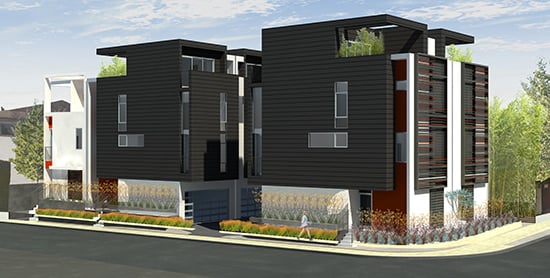
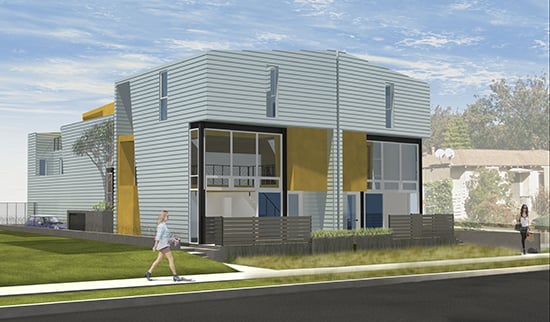
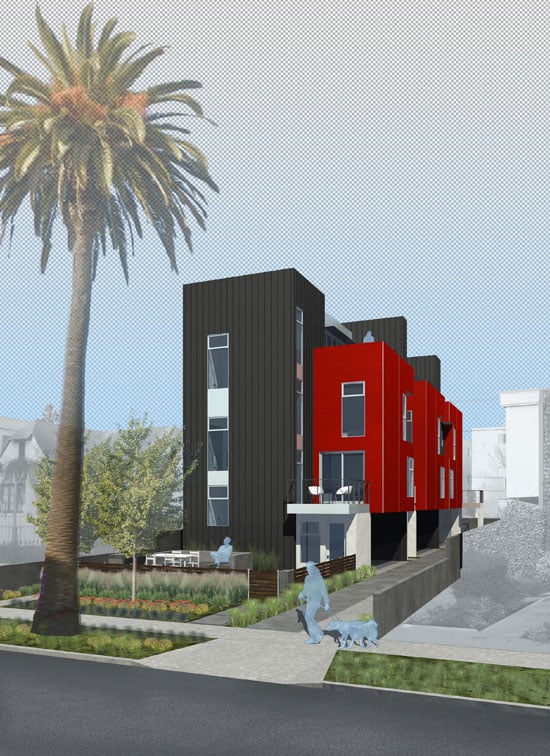
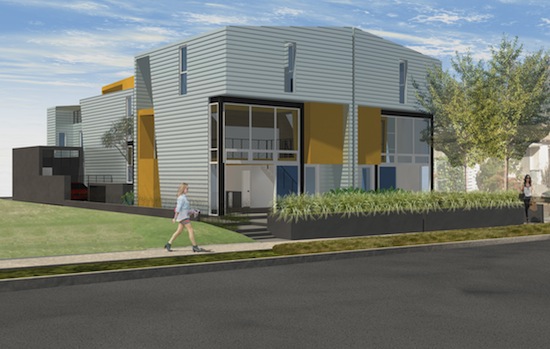
One of my favorite occurrences in the office is when my business partners and I have an impromptu design session, as recently occurred on the Cullen Street Small Lot Subdivision Project. Even though the project is far along in the architecture process (it was just submitted for permit plan check), we came to realize that the third floor plan master suite in one of the units was not up to par.

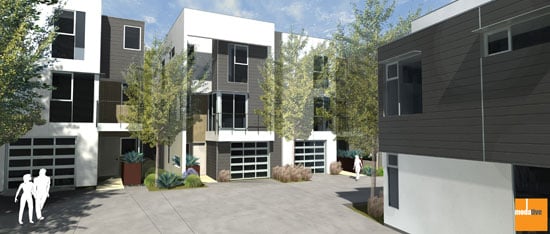
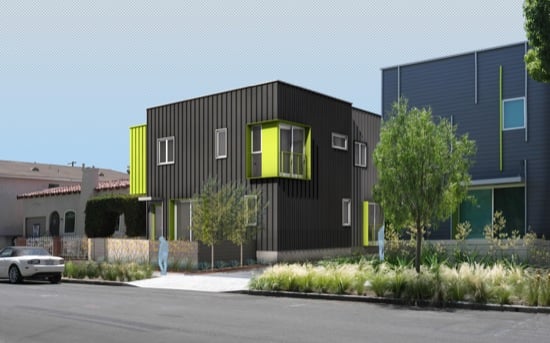
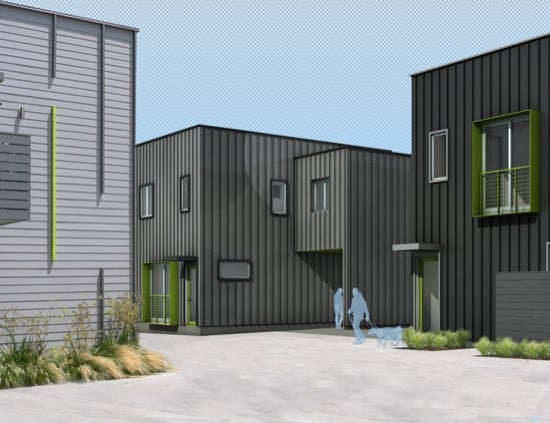
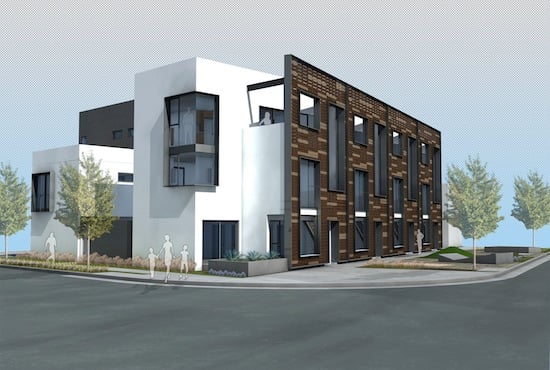
The plan in question is the top floor of Unit #3, the unit with the corner window in the foreground of the bottom right rendering.
These design sessions are very informal and typically consist of two of us hovering over the third person's computer screen blurting out comments.
"Move that wall over 6 inches left."
"OK, now let's try to fit the shower in that corner."
"Are you crazy? You can't put the shower there. We can't plumb that and it's a privacy nightmare!"
"What if we flip it to the other side of the room? Let me see it in 3D."
"That's better. Let's make that an option."
Arguments develop over seemingly small things like how many dressers people like to have in their bedroom. These often heated conversations are all in the name of great design. I think the tension is a good thing.
Average design is quiet. It rarely moves people to take a real stance.
Even something as simple as a master bedroom floor plan revision goes through this filter. Three (or more) design opinions pushing to make it better. These modern homes are small. Well designed floor plans are critical.
Here's a look at the multiple floor plan options that came out of this particular meeting of the minds.
Floor Plan Option 1 - The Original
This is what we started with: a floor plan with some problems. The wide "X" at the bottom of the room is an open-to-below space, meaning it's open to the living room below. Very loft like. We love open-to-below spaces in our homes; however, in this case. it was creating problems. The (low) bed wall was too short and the access to the office nook was awkward. There were other issues as well, but I'll spare you those details.
Floor Plan Option 2 - The Big Bedroom
The simplest solution to the issues in the original plan was to expand the room downward, closing off most of the open-to-below space. This, however, created a bedroom that was a bit large. If someone wanted a TV in the bedroom, they'd have to put it on a side wall because the wall across from the bed was too far way. Even more of an issue is that most people would rather have a larger bathroom and closet with this expanded space, not just a huge bedroom.
Floor Plan Option 3 - The Vestibule
So that led to Option 3, where we moved that bathroom over to the expanded space. This allowed for a larger bathroom and closet. We also added a little vestibule area with a linen closet. The shower has a little window into the bedroom - how sexy. The whole bath/closet area can be closed off with a barn style sliding door. All the spaces have lots of natural light.
Floor Plan Option 4 - The Voyeur Shower
Similar to Option 3, but we moved the shower to the corner glass window. I know, very voyeuristic. I wasn't a big fan of this shower location, but it did create enough room for a tub in the bathroom.
Floor Plan Option 5 - The Big Bath & Closet
In this option we flipped the closet and shower locations. This created a large bathroom and closet. It's a technicality, but it's much easier to run the plumbing with the bathroom in this location.
Floor Plan Option 6 - The Flex Space
Here we took Option 5 and reduced the closet size creating a flex area for a desk, exercise equipment, or crib. Spaces like this are valuable in these small urban homes. This option also allows for bed wall flexibility.
I'd love to get some feedback as to which option you would prefer to live in. And if you'd like to offer up more than just a vote, feel free to leave a comment.
In several days, I'll reveal which option the clients selected.
Posted by Derek Leavitt on Wed, Mar 03, 2010 @ 07:31 AM
This post is part of the How to Start an Architecture Firm series.
In February 2006, Christian, Michael and I went to work on forming our own architecture firm. The following is tip number five of seven in our start-up strategy.
Tip 05: Start and Stay Small

photo credit
I've never been a fan of large companies. It's probably because I've never worked for one. Before founding Modative, I worked for three small- to medium-sized architecture firms. Christian and Michael have similar experiences, learning the architecture business in offices where you had to do it all. There was no way to pass along unwanted tasks or hide amongst hordes of CAD stations.
Christian always jokes that in one office, the first thing the boss asked him to do on his first day was to take out the trash. Experiences like this are humbling, but also critical to developing the kind of discipline it takes to start your own architecture firm.
If I don't do this myself, it won't get done.
A philosophy that clearly ties into Tip 02: Do it Yourself.
Growing a Company on Fact vs. Faith?
Many people set out on their own with intentions of growing their offices fast. Far too often, this growth is unwarranted.
Are you hiring people because you can't possibly complete your long-term billable work with your current staff?
Or, are you hiring in a panic because you momentarily feel overwhelmed at a perceived inundation of new projects in the office?
Even worse, are you hiring so you can tell people at dinner parties that your office has X number of people or so you don't have to work more than 40 hours a week?
We have faced all of these situations here at Modative. To expand or not to expand. I credit our frequent internal debates amongst my partners and I to keeping our company small and responsible when it comes to hiring.
It would have been far too easy in our founding year (2006) to grow our company based on faith in the booming economy. But as this glimpse of the U.S. stock market shows over our first three years in business, we made the right call to base our growth on fact rather than faith.
Technology Enables "Smallness"
When I graduated from architecture school 10 years ago, most firms were organized in a much different fashion. Architecture offices relied on larger project teams to complete the labor-intensive production and coordination that 2D CAD (and even some hand drafting) required. As technology improved, these old-school firms had a tough time changing. Their principals, often from a generation that didn't grow up with computers, would eventually come to embrace new technology, but in a slow evolutionary way, dragged down by large production-based staffs. It has taken 10 years for many of these old-school firms to evolve into technology. Many of them still resist.
Having three founders that grew up with computers and rapid technology changes, our firm was founded with a much different mentality. We embrace technology because it enables us to remain small. Our new-school firm can accomplish the same amount of work with one person that an old-school firm needed 4-8 people to complete. These two technologies help make this possible:
ArchiOffice
This program is the key to keeping us organized. It's a management system for our projects, contacts, time cards, calendar, billing and much more. Check out a prior post where I describe our ArchiOffice use in more detail.
A screenshot of the ArchiOffice dashboard.
ArchiCAD
I've worked with ArchiCAD, our CAD software here at Modative, on and off for nine years. ArchiCAD's BIM (building information modeling) technology enables "smallness" by taking much of the grunt work out of drawing production, allowing us to focus on creativity. Virtually constructing projects before they are built not only creates pretty pictures to show our clients, but it also drastically reduces expensive construction conflicts.

An example of how our virtual building models contain information on the structural systems, reducing potential drawing errors.
Stay tuned as we fill in the last two tips of our 7 Tips for Starting an Architecture Firm.
|
|
7 Tips for Starting an Architecture Firm
|
 |
Not a tip, but a critical theme in our start-up adventure. posted 12.03.09
|
 |
posted 12.08.09
|
|
posted 12.18.09
|
|
posted 12.22.09
|
|
posted 01.22.10
|
|
05 Start and Stay Small
posted 03.03.10
|
|
posted 04.05.10
|
|
07 ___________________________
|
Want to stay up to date as we post the 7 Tips to Starting an Architecture Firm? Subscribe to this blog by adding your email to the subscribe form on the right.
Posted by Derek Leavitt on Fri, Jan 22, 2010 @ 08:15 AM
This post is part of the How to Start an Architecture Firm series.
In February 2006, the three of us went to work on forming our own architecture firm. The following is tip number four of seven in our start-up strategy.
Tip 04: Learn From The Bad

photo credit
As every aspiring architect leaves school, they are faced with an important decision, "Where should I work?" This is a tough decision. Go work for a big corporate firm and risk getting stuck on one project for several years or go for a small design-oriented firm and miss out on some of the business savvy of a larger firm?
Although this is an obvious over-simplification of architecture firm types, many young professionals fret over this decision.
When I graduated from USC, Michael (fellow Modative partner) and I went to work for a medium-sized (8-15 people) sized firm in Santa Monica, CA called David Jay Flood Architect. My experience at this firm was invaluable. I was given a high level of responsibility managing large projects at a young age. I did a lot of learning on the job.
After three years at that firm, I moved on, working for two more firms before founding Modative with Michael and Christian in 2006. In my time working for other people I learned plenty of good architecture industry practices, but I also learned a lot of what not to do. I call this "learning from the bad."
So while my experience involved working for small- and medium-sized firms, I've come to realize that the type of firm(s) you work for is less relevant than what you gain from the experience. Learning from the bad is a big part of this. Learning what to do and what not to do are inextricably tied. If you never give yourself the opportunity to learn what not to do by watching other people work, you're more likely to make those mistakes when you're running your own firm
Whether you don't like the way your boss manages projects or you made a big mistake on a set of plans, you will no doubt encounter plenty of negative situations working for others. These bad experiences are invaluable when you decide to start your own firm. File them away for when you're the boss and have to decide how to run your firm.
So, when the time comes to start your firm, will you make the same mistakes or will you learn from the bad?
Stay tuned over the next several weeks as we fill in the last three tips of our
7 Tips for Starting an Architecture Firm.
|
|
7 Tips for Starting an Architecture Firm
|
 |
Not a tip, but a critical theme in our start-up adventure. posted 12.03.09
|
 |
posted 12.08.09
|
|
posted 12.18.09
|
|
posted 12.22.09
|
|
04 Learn from the Badposted 01.22.10
|
|
posted 03.03.10
|
|
posted 04.05.10
|
|
07 ___________________________
|
Want to stay up to date as we post the 7 Tips to Starting an Architecture Firm? Subscribe to this blog by adding your email to the subscribe form on the right.